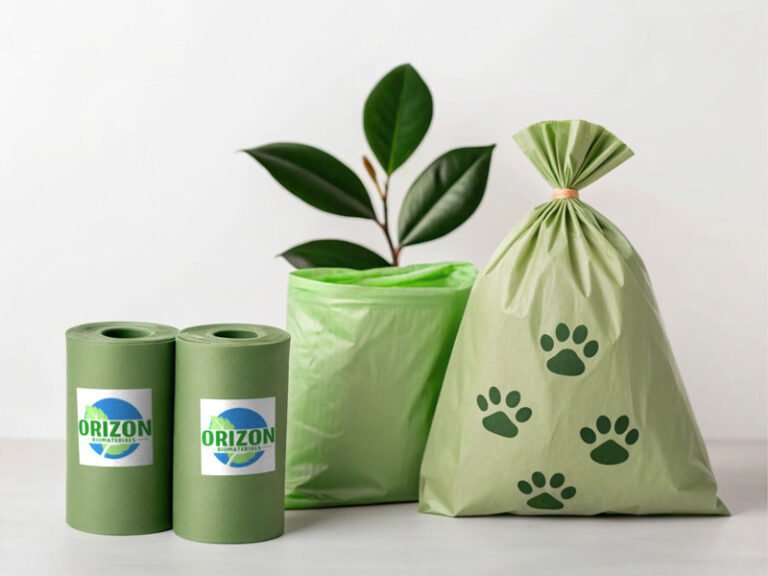
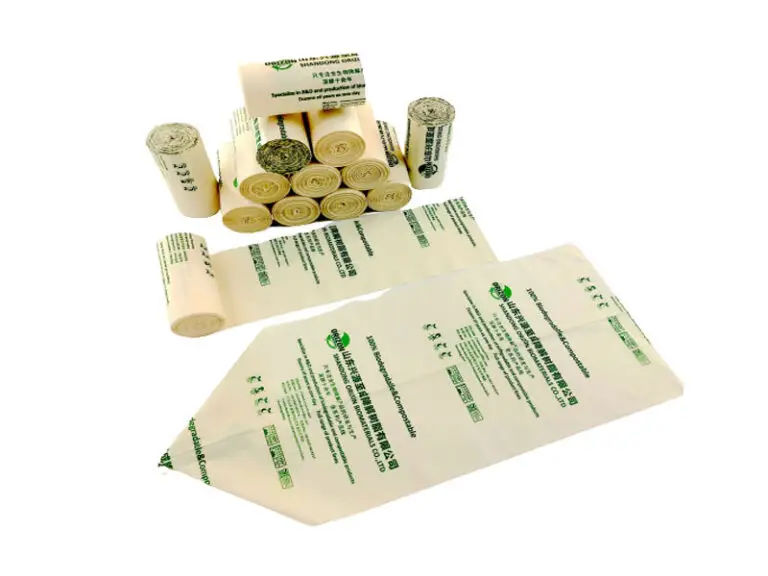
Plastic materials are widely used in packaging, retail bags, garbage bags, and many everyday products. Among these materials, polyethylene (PE) is one of the most common conventional plastics, while PBAT (polybutylene adipate terephthalate) is increasingly used in biodegradable plastic and compostable packaging products.
Although PBAT and PE can look similar in finished products such as flexible films and bags, they behave very differently in terms of raw materials, biodegradability, and environmental impact.
In this guide, we explain the key differences between PBAT and PE, how each material is produced, and when each material is typically used.
What Is PE Plastic?
PE (polyethylene) is one of the most widely used plastics in the world. It is produced from petroleum-based raw materials and belongs to the family of conventional polyolefin plastics.
Common types of polyethylene include:
- LDPE (Low Density Polyethylene)
- HDPE (High Density Polyethylene)
- LLDPE (Linear Low Density Polyethylene)
PE is widely used because it offers several advantages:
- good flexibility
- strong moisture resistance
- low production cost
- easy processing in film extrusion
Because of these properties, PE is commonly used in:
- shopping bags
- garbage bags
- packaging films
- agricultural films
- plastic liners
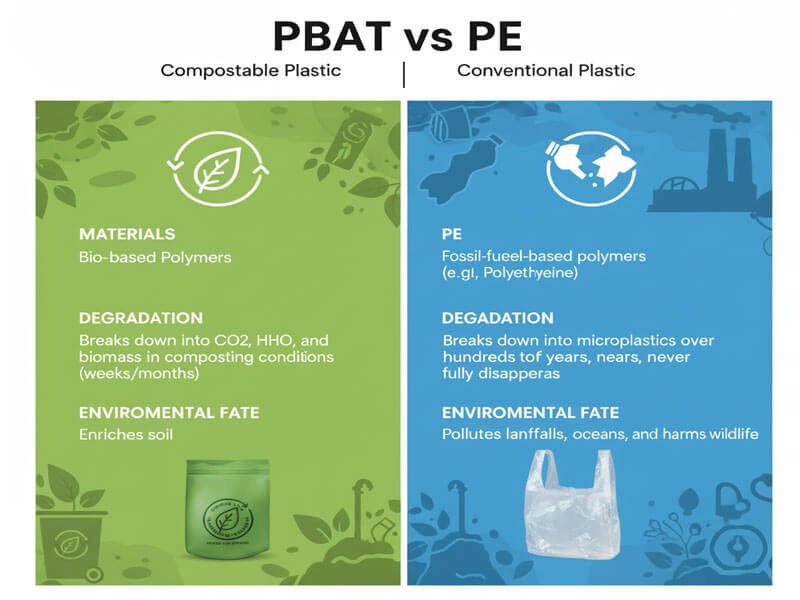
However, polyethylene is not biodegradable, which means it can persist in the environment for many years.
What Is PBAT Plastic?
PBAT (polybutylene adipate terephthalate) is a biodegradable polyester that is commonly used in compostable plastic products.
Unlike conventional plastics such as PE, PBAT is designed to break down through microbial activity under suitable composting conditions.
PBAT is often used in combination with other biopolymers such:
- PLA (polylactic acid)
- starch-based plastics
These blends allow manufacturers to produce flexible films that maintain strength and elasticity while still meeting compostability standards.
PBAT-based materials are commonly used for :
- compostable garbage bags
- compostable food waste liners
- compostable shopping bags
- other sustainable packaging applications that require bioplastics instead of conventional plastics.
Many PBAT-based products can meet compostability standards such as ASTM D6400 or EN 13432.
PBAT vs PE: Key Differences
Although PBAT and PE can appear similar in finished plastic bags, they differ significantly in composition and environmental behavior.
| Feature | PBAT | PE |
|---|---|---|
| Material type | Biodegradable polyester | Conventional polyolefin |
| Raw material source | Fossil-based but biodegradable polymer | Petroleum-based |
| Biodegradability | Biodegradable under composting conditions | Not biodegradable |
| Compostability | Can meet compostable standards | Not compostable |
| Environmental persistence | Breaks down through microbial action | Persists in environment |
| Typical use | Compostable bags and packaging | Conventional plastic bags and films |
Because of these differences, PBAT is often used as a replacement material for polyethylene in compostable packaging applications.
Environmental Impact: PBAT vs PE
One of the most important differences between PBAT and PE is their environmental behavior.
PE Environmental Behavior
Polyethylene is durable and chemically stable, which makes it useful in many industrial applications. However, these same properties also mean that PE does not easily break down in natural environments.
Over time, PE can fragment into smaller particles rather than fully biodegrading.
PBAT Environmental Behavior
PBAT is designed to degrade through microbial activity in composting environments, making it suitable for certified biodegradable plastic materials.
Under industrial composting conditions, PBAT-based materials can break down into:
- carbon dioxide
- water
- biomass
This allows PBAT to be used in certified compostable packaging systems.
For example, PBAT-based compostable plastics can meet standards such as ASTM D6400 or EN 13432.
Performance Differences Between PBAT and PE
From a performance perspective, PBAT and PE share several similarities because both materials are flexible film plastics.
However, there are still some differences.
Flexibility
PBAT offers flexibility similar to LDPE, making it suitable for flexible packaging films and bags.
Mechanical strength
PE generally offers higher tensile strength and durability compared with most biodegradable plastics.
PBAT blends are designed to improve mechanical strength while maintaining biodegradability.
Other emerging biodegradable polymers such as PHA plastic are also being explored for sustainable packaging.
Moisture resistance
PE has excellent moisture resistance. PBAT films can also provide good moisture resistance, especially when blended with other materials.
Processing
Both PBAT and PE can be processed using similar equipment such as:
- film extrusion machines
- bag-making machines
- printing and sealing equipment
This compatibility allows manufacturers to adapt existing production lines to produce compostable materials.
Applications of PBAT and PE
Because of their different environmental properties, PBAT and PE are typically used in different types of applications.
PBAT applications
PBAT is commonly used in:
- compostable trash bags
- compostable food waste liners
- other applications where bioplastics are preferred over traditional plastics.
PE applications
PE remains widely used for conventional plastic products, including:
- standard garbage bags
- industrial packaging films
- agricultural plastic films
- plastic liners and protective films
Is PBAT a Replacement for PE?
PBAT is often used as a partial replacement for polyethylene in compostable plastic products, especially where biodegradable materials are required.
However, PBAT does not completely replace PE in all applications.
PE is still widely used because of:
- lower material cost
- excellent mechanical strength
- established recycling infrastructure
PBAT is typically chosen when compostability or biodegradable packaging is required by regulations or sustainability programs.
Conclusion
PBAT and PE are both flexible plastic materials used in packaging and plastic bags, but they differ significantly in environmental behavior.
PE is a conventional petroleum-based plastic that offers excellent durability and low cost but is not biodegradable.
PBAT, on the other hand, is a biodegradable polyester used in compostable plastics and sustainable packaging systems.
As regulations and sustainability initiatives continue to evolve worldwide, PBAT and other biodegradable materials are increasingly used in applications where compostability is required.
Understanding the differences between PBAT and PE helps manufacturers choose the right material when developing biodegradable plastics and sustainable packaging materials.