Paper bags are often seen as a more sustainable alternative to plastic bags. They are widely used in retail, grocery packaging, takeout, and waste collection because they are made from natural fiber and are generally easier to recycle.
But when it comes to composting, many people still ask the same question:
Are paper bags compostable?
The short answer is: some paper bags are compostable, but not all paper bags are suitable for composting in every situation.
Whether a paper bag can be composted depends on several factors, including its material composition, coatings, inks, adhesives, and how it is used.
In this guide, we explain when paper bags are compostable, when they are not, and how they compare with certified compostable bags in food waste and packaging applications.
For a broader overview of compostable materials, see our guide to biodegradable plastics.

Are Paper Bags Compostable?
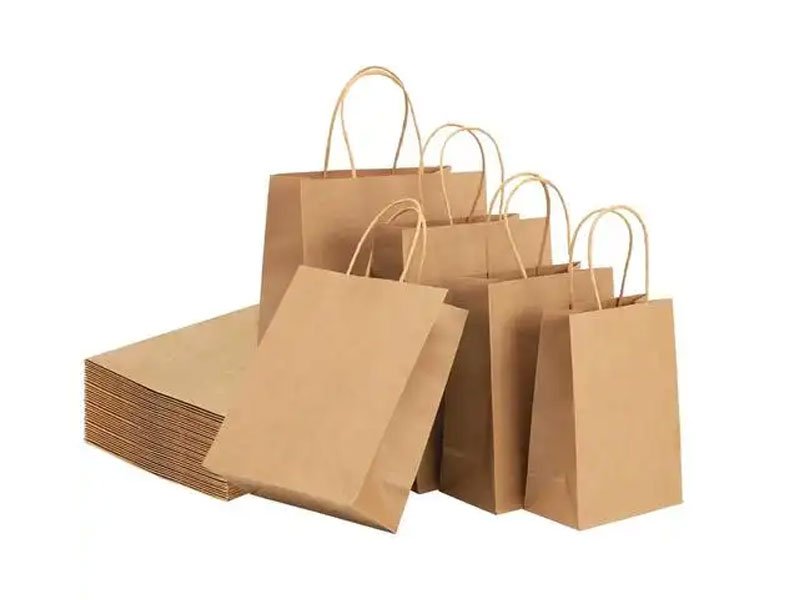
In general, plain uncoated paper bags can be compostable because paper is made from plant-based fiber that can break down naturally under the right conditions.
However, not all paper bags are equally compostable.
A paper bag is more likely to be compostable if it is:
- made from uncoated kraft paper
- free from plastic lining
- printed with compost-safe inks
- free from synthetic adhesives or chemical treatments
A paper bag may not be suitable for composting if it contains:
- plastic coatings
- wax layers
- laminated surfaces
- synthetic handles
- heavy ink coverage or chemical additives
So while paper itself is biodegradable, the final bag product may not always be fully compostable.
Are Paper Bags Biodegradable?
Yes, most paper bags are biodegradable because paper fiber can be broken down by microorganisms over time.
But biodegradable does not always mean the same thing as compostable.
A biodegradable paper bag may break down naturally, but a compostable product is expected to break down in a way that supports compost quality and leaves no harmful residue.
This difference is important, especially for regulated waste systems.
For more on certification standards, see ASTM D6400.

When Can Paper Bags Be Composted?
Paper bags can usually be composted when they are clean, dry, and made from untreated paper materials.
Typical examples include:
- plain kraft paper bags
- uncoated grocery paper bags
- untreated paper packaging bags
- shredded brown paper bags used as carbon-rich compost material
In home composting, paper bags are often added in small pieces to improve airflow and balance wet food waste with dry carbon material.
In commercial composting systems, paper products may also be accepted if they meet local facility requirements.
When Should Paper Bags Not Be Composted?
Not all paper bags belong in the compost bin.
You should avoid composting paper bags if they contain:
Plastic lining
Some paper bags include an inner plastic layer for moisture resistance or leak protection.
Glossy or laminated finishes
Shiny paper surfaces often indicate plastic or chemical coatings.
Wax coatings
Wax-treated paper bags may not break down properly in compost.
Heavy chemical inks or adhesives
Certain inks, dyes, or glue systems may not be suitable for composting.
Food contamination with grease or chemicals
Light food residue may be acceptable in some compost systems, but oil-heavy or chemically contaminated bags may cause problems depending on the local composting process.

Are Paper Bags Better Than Plastic Bags?
From an environmental perspective, paper bags are often preferred over conventional plastic bags because they are:
- made from renewable fiber resources
- more widely recyclable
- more likely to biodegrade naturally
- less likely to persist as long-term plastic pollution
However, paper bags also have limitations.
Compared with plastic bags, paper bags are usually:
- heavier
- less moisture-resistant
- easier to tear
- less suitable for wet organic waste unless specially designed
So paper bags are not always a complete replacement for plastic in every application.
Paper Bags vs Certified Compostable Bags
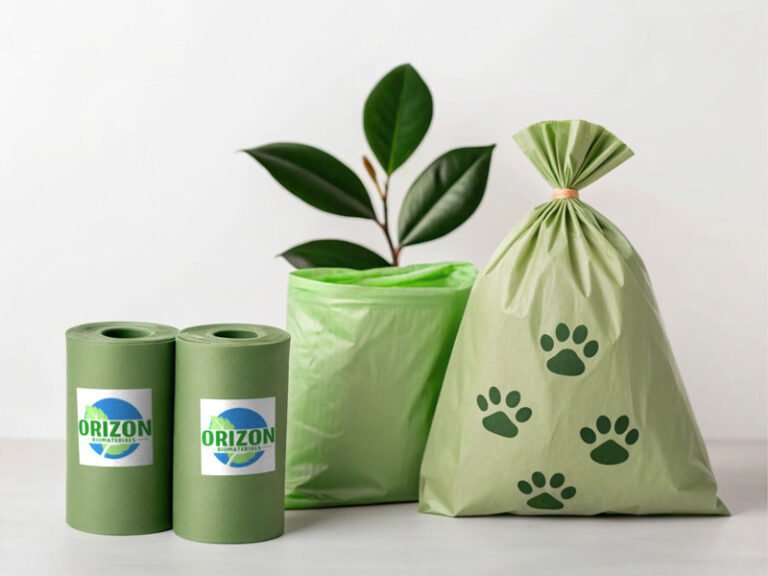
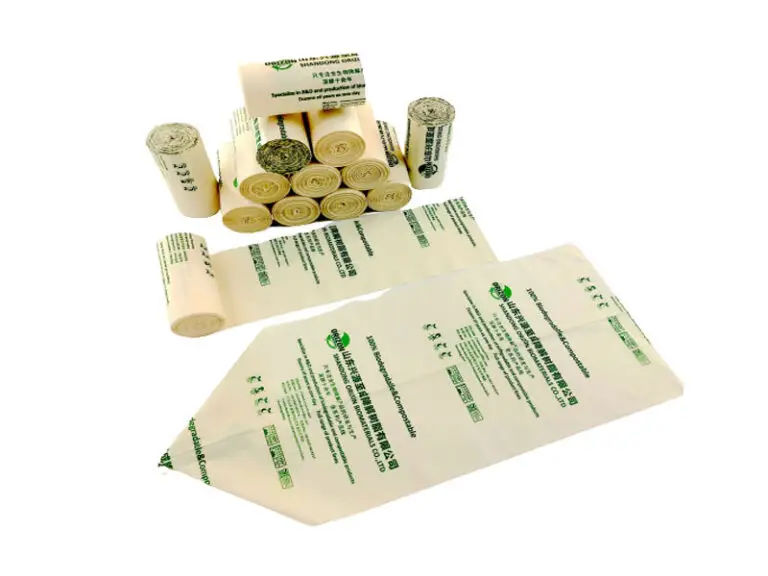
Although paper bags can sometimes be composted, they are different from certified compostable bags designed for organic waste collection or compostable packaging.
Here is the key difference:
| Feature | Paper Bags | Certified Compostable Bags |
|---|---|---|
| Main material | Paper fiber | Compostable bioplastics or compostable blends |
| Biodegradable | Usually yes | Yes, if certified |
| Compostable | Sometimes | Yes, under certified conditions |
| Moisture resistance | Limited | Better in many applications |
| Suitable for wet food waste | Often limited | More suitable |
| Certification system | Not always certified | Often certified to ASTM D6400 / EN 13432 |
For dry goods and lightweight retail packaging, paper bags can be a practical option.
For food waste collection, liners, and certain packaging uses, certified compostable bags often offer better leak resistance, flexibility, and system compatibility.
See also our guide to bioplastics vs plastics.
Are Paper Bags Recyclable or Compostable?
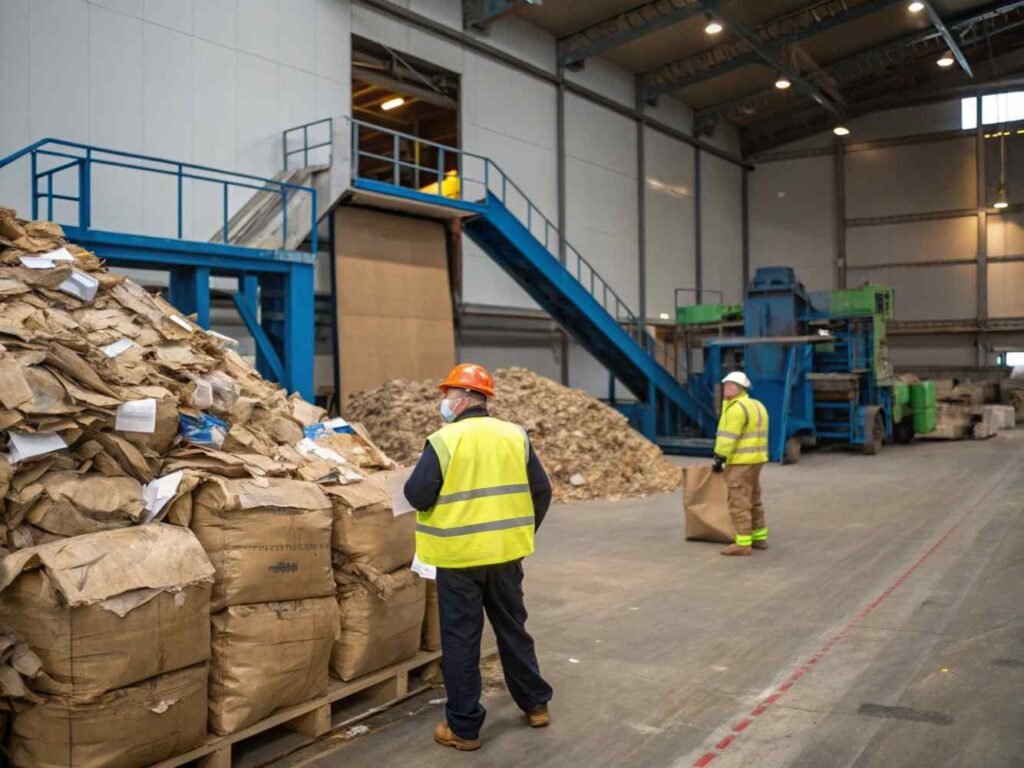
Many paper bags can be recyclable, compostable, or both, depending on their construction and local waste system rules.
In practice:
- clean, dry paper bags are often best directed to recycling
- plain untreated paper bags may also be composted
- coated or mixed-material paper bags may be neither easily recyclable nor compostable
This is why end-of-life decisions should depend on:
- local recycling rules
- compost facility acceptance policies
- the actual structure of the bag
A bag is not sustainable simply because it is made from paper. The full material design still matters.
Can Paper Bags Be Used for Food Waste Collection?
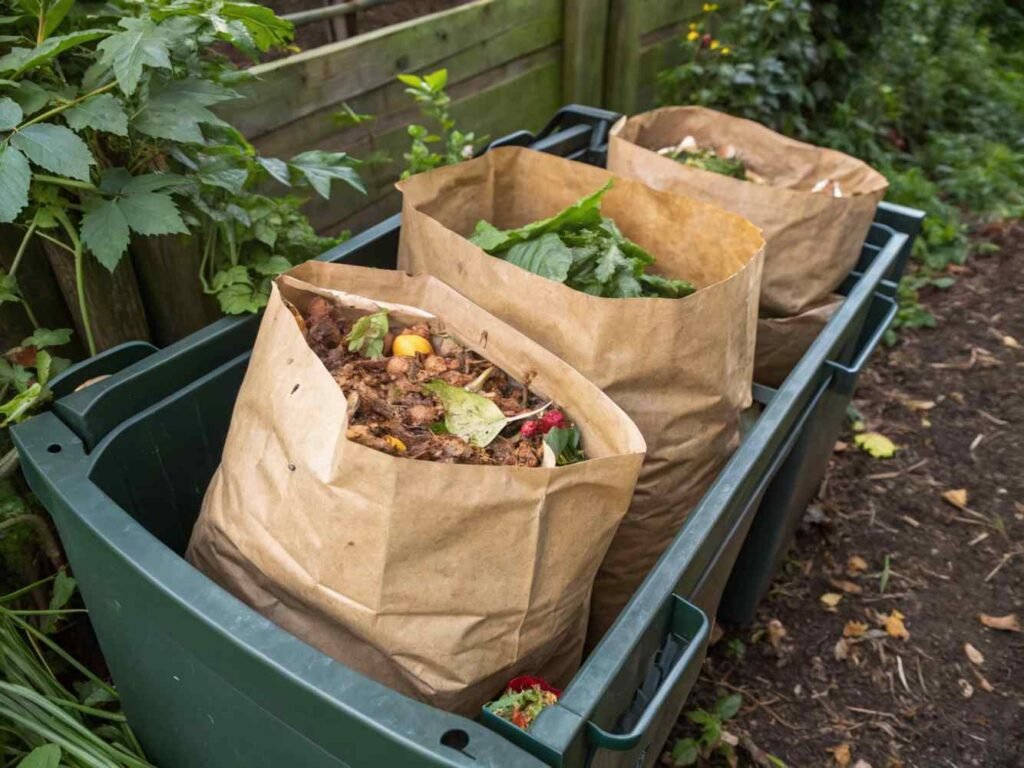
Paper bags are sometimes used for food scraps, but they have practical limitations.
They may work for:
- dry organic waste
- short-term kitchen collection
- light compost caddy use with low moisture content
However, paper bags are less ideal when:
- the waste is wet or heavy
- the collection period is long
- leak resistance is important
- the liner needs flexibility and tear strength
In these situations, certified compostable liners are usually more effective.
For commercial solutions, see our compostable garbage bags.
Conclusion
So, are paper bags compostable?
Yes, some paper bags are compostable, especially when they are made from plain, uncoated paper without plastic lining or harmful additives.
However, not all paper bags are suitable for composting. Coatings, adhesives, laminations, and mixed materials can prevent proper breakdown and may contaminate compost systems.
Paper bags can be a useful sustainable packaging option in some cases, especially for dry goods and simple retail use. But for wet waste, food scrap collection, and applications requiring reliable compostability performance, certified compostable bags are often the better solution.
Understanding the difference between paper-based packaging and certified compostable materials is essential for making better packaging and waste-management decisions.
FAQ
Are all paper bags compostable?
No. Plain uncoated paper bags may be compostable, but bags with plastic coatings, wax layers, laminations, or synthetic additives may not be suitable for composting.
Are paper bags biodegradable?
Yes. Most paper bags are biodegradable because paper fiber can be broken down naturally by microorganisms.
Can glossy paper bags be composted?
Usually not. Glossy or laminated paper bags often contain coatings that reduce compostability.
Are paper bags better than plastic bags?
Paper bags can be better in some applications because they are fiber-based and more likely to biodegrade or recycle. However, they are not always stronger or more suitable for wet waste.
Can paper bags replace compostable bags?
Not always. Paper bags may work for dry packaging, but certified compostable bags are often more suitable for wet organic waste, food scrap liners, and applications requiring moisture resistance.