Waste management systems are becoming increasingly important as cities, businesses, and consumers look for ways to reduce environmental impact.
Two of the most widely discussed solutions are recycling and composting. Both aim to reduce waste sent to landfills, but they operate in very different ways and handle different types of materials.
Understanding the difference between recycling and composting helps businesses and households choose the most appropriate disposal method for different products, including packaging materials.
This guide explains how recycling and composting work, their advantages and limitations, and when each system is most effective.
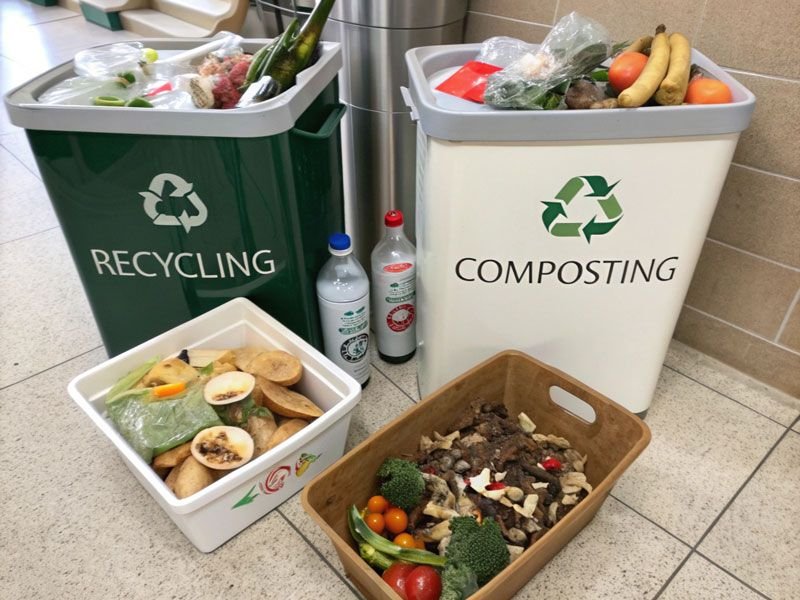
What Is Recycling?
Recycling is a waste management process that converts used materials into new products.
Instead of sending materials to landfill, recyclable materials are collected, sorted, processed, and remanufactured into new goods.
Common recyclable materials include:
- paper and cardboard
- glass
- metals such as aluminum
- certain plastics such as PET and HDPE
Recycling helps conserve natural resources and reduces the need for raw material extraction.
However, recycling systems depend heavily on proper waste sorting, material purity, and local recycling infrastructure.
Contaminated or mixed materials are often rejected during the recycling process.
What Is Composting?
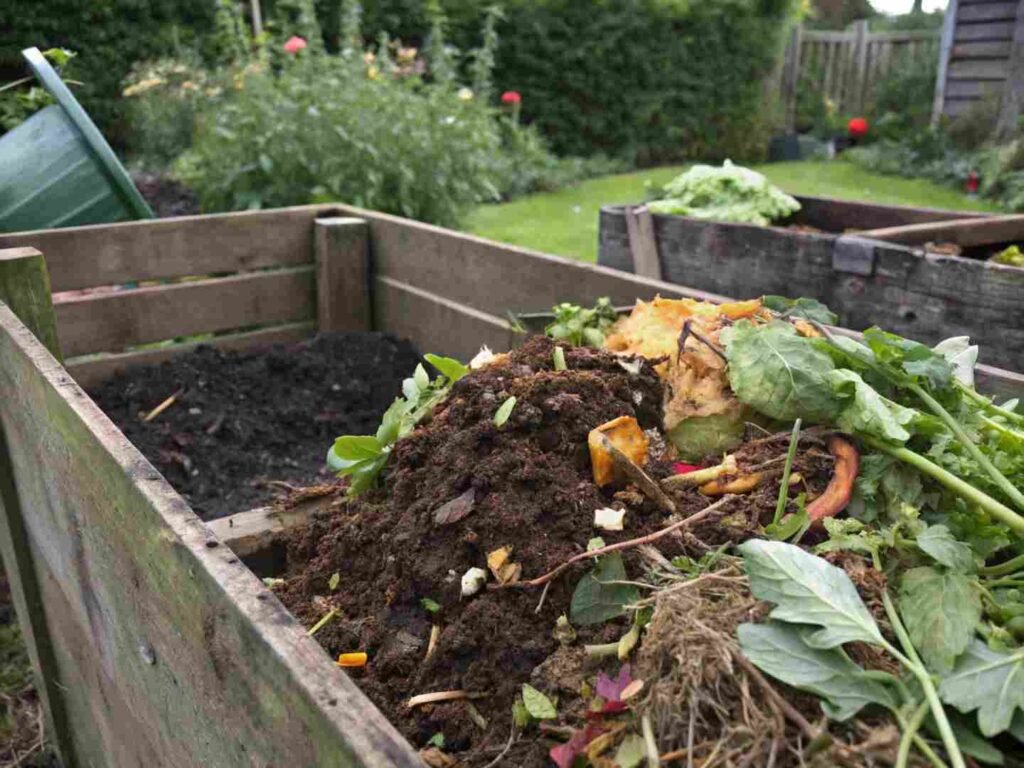
Composting is a biological process in which organic materials are broken down by microorganisms into nutrient-rich compost.
This process occurs when organic waste is exposed to:
- oxygen
- moisture
- microorganisms
- suitable temperature conditions
Typical compostable materials include:
- food waste
- yard waste
- paper-based materials
- certified compostable packaging
Under the right conditions, these materials decompose into compost that can be used to enrich soil.
For certain plastic products to be composted, they must meet certification standards such as ASTM D6400 or EN 13432.
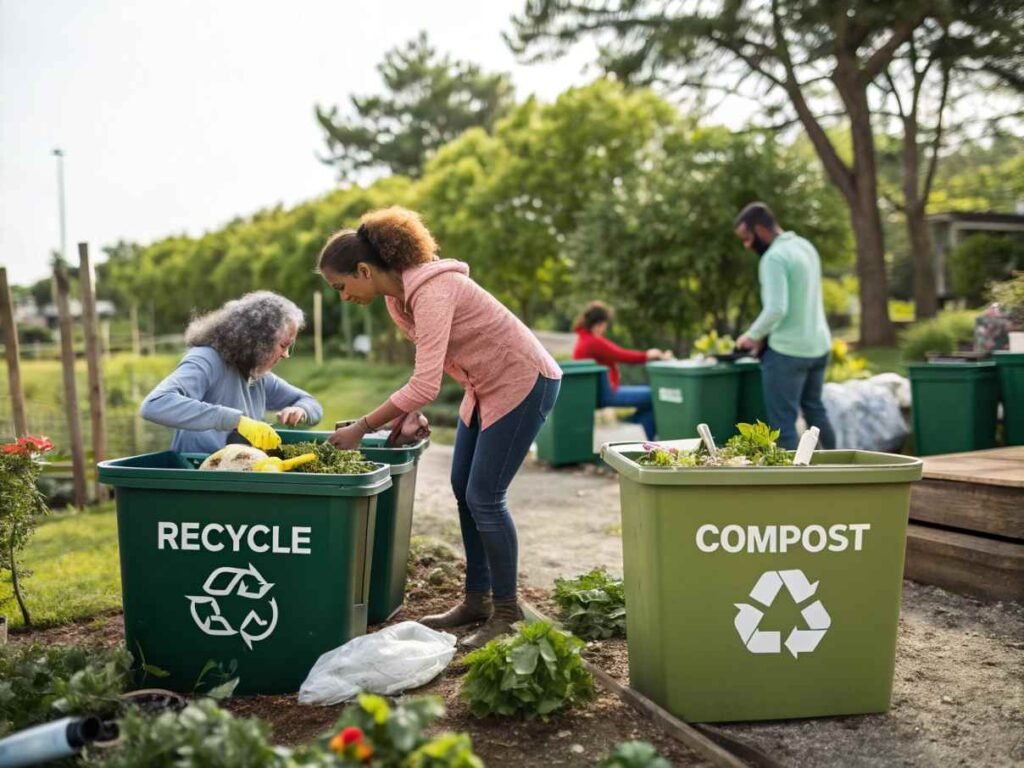
Recycling vs Composting: Key Differences
| Aspect | Recycling | Composting |
|---|---|---|
| Main purpose | Recover materials to make new products | Convert organic waste into compost |
| Materials handled | Paper, metal, glass, certain plastics | Food waste, yard waste, compostable materials |
| Process type | Industrial processing and remanufacturing | Biological decomposition |
| Output | Recycled raw materials | Compost used for soil improvement |
| Infrastructure | Recycling plants | Composting facilities or organic waste systems |
Recycling focuses on material recovery, while composting focuses on organic waste decomposition.
When Recycling Works Best
Recycling is most effective when materials can be repeatedly processed into new products.
Examples include:
- aluminum cans
- glass bottles
- cardboard packaging
- certain rigid plastic containers
These materials can often be recycled multiple times with relatively low contamination risk.
However, flexible plastic films, multilayer packaging, and contaminated plastics are often difficult to recycle.
When Composting Is the Better Option
Composting systems are especially useful for materials contaminated with organic waste.
For example:
- food scraps
- food-soiled paper packaging
- food waste liners
- compostable bags used in organic waste collection
In these situations, composting can be more practical than recycling because separating food residues from packaging materials is difficult.
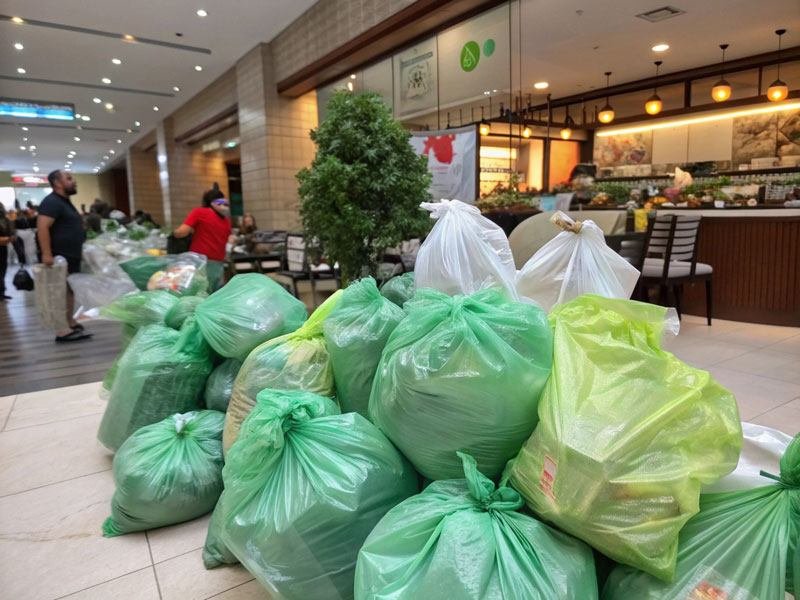
Many cities now operate organic waste collection systems, where compostable liners help collect food waste more efficiently.
The Role of Compostable Packaging
Compostable packaging is designed to break down in controlled composting environments along with organic waste.
These materials are commonly used for:
- food waste collection bags
- compostable garbage bags
- compostable food packaging
To ensure proper decomposition, compostable plastics must meet certification standards such as:
- ASTM D6400 (United States)
- EN 13432 (Europe)
Certified compostable materials are designed to:
- biodegrade during composting
- disintegrate into small fragments
- leave no harmful residues in compost
Learn more about these materials in our guide to biodegradable plastics . cle plastics, compost kitchen scraps.
Environmental Benefits of Recycling
Recycling provides several environmental advantages.
Resource conservation
Recycling reduces the need to extract raw materials such as minerals, timber, and fossil fuels.
Energy savings
Producing materials from recycled inputs often requires less energy than manufacturing them from raw resources.
Waste reduction
Recycling diverts large volumes of waste from landfills.
However, recycling efficiency depends heavily on proper waste sorting and the availability of recycling facilities.
Environmental Benefits of Composting
Composting offers environmental benefits in different areas.
Organic waste reduction
Food waste represents a large portion of municipal waste streams. Composting helps divert this material from landfills.
Soil improvement
Compost improves soil fertility, water retention, and microbial activity.
Reduced methane emissions
When organic waste decomposes in landfills, it can produce methane. Composting helps reduce this process by allowing controlled aerobic decomposition.
Challenges of Recycling and Composting
Both systems have limitations.
Recycling challenges
- contamination from mixed materials
- complex packaging structures
- limited recycling markets for certain plastics
Composting challenges
- limited composting infrastructure in some regions
- confusion about which materials are compostable
- need for certified compostable packaging
Proper waste management systems require both recycling and composting to work together effectively.
Recycling and Composting in Sustainable Packaging
Many sustainable packaging strategies now combine both systems.
Examples include:
- recyclable paper packaging
- compostable food waste bags
- compostable food service packaging
The goal is to ensure each product is designed for the most appropriate waste management system.
For example:
- clean rigid plastics may be better suited for recycling
- food-contaminated packaging may be better suited for composting
Conclusion
Recycling and composting are both important components of modern waste management systems.
Recycling focuses on recovering materials and turning them into new products, while composting focuses on converting organic waste into nutrient-rich compost.
Rather than competing solutions, recycling and composting are complementary systems that help reduce landfill waste and support more sustainable resource use.
Understanding how each system works allows businesses, municipalities, and consumers to make better decisions about packaging materials and waste disposal.
FAQ
Is composting better than recycling?
Not necessarily. Recycling is better for materials such as metals and glass, while composting is better for organic waste and certified compostable packaging.
Can compostable plastics be recycled?
No. Compostable plastics should not be mixed with conventional plastic recycling streams because they require different processing conditions.
What materials should be composted?
Typical compostable materials include food scraps, yard waste, and certified compostable packaging.
Why are compostable bags used for food waste?
Compostable bags help collect and transport food waste without contaminating composting systems with conventional plastics.