As industries search for alternatives to petroleum-based plastics, starch-based plastics have emerged as one of the most widely used materials in biodegradable and compostable packaging.
Derived from renewable agricultural resources such as corn, potato, or cassava, starch bioplastics can significantly reduce dependence on fossil fuels while offering environmentally responsible disposal options.
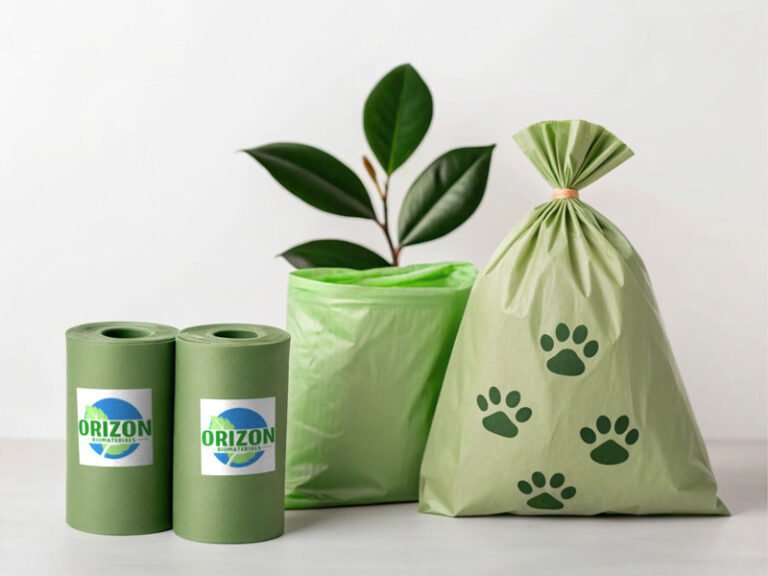
Today, starch-based materials are commonly used in products such as:
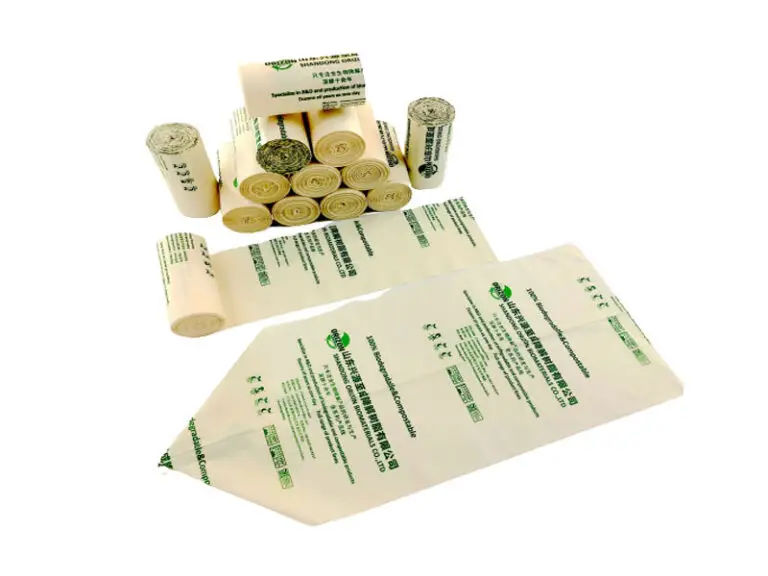
- compostable garbage bags
- food waste collection liners
- compostable shopping bags
- biodegradable packaging films
In this guide, we explain how starch-based bioplastics are produced, how they work, and why they are important in sustainable packaging systems.
For a broader overview of compostable plastics, see our guide to biodegradable plastics.
What Are Starch-Based Plastics?
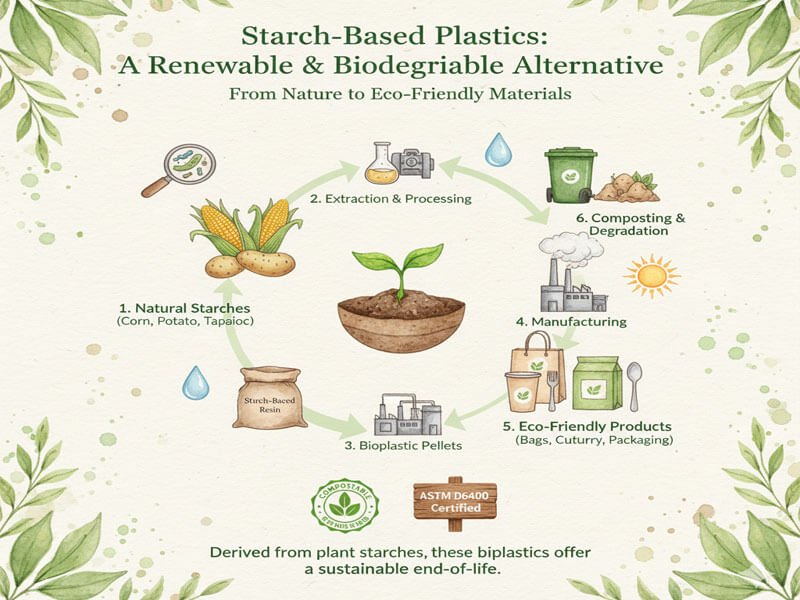
Starch-based plastics are bioplastics made partially or entirely from natural starch polymers extracted from plants.
Starch is a natural carbohydrate found in many crops, including:
- corn
- potatoes
- wheat
- cassava
Because starch is renewable and biodegradable, it can serve as a raw material for producing plastics that break down more easily in composting environments.
However, pure starch alone cannot form a durable plastic material. Therefore, starch is usually blended with other biodegradable polymers such as:
- PLA (polylactic acid)
- PBAT (polybutylene adipate terephthalate)
These blends improve flexibility, strength, and moisture resistance.
Learn more about these materials in PBAT vs PLA.
How Starch-Based Bioplastics Are Produced
The production of starch-based plastics typically involves several key steps.
1. Starch Extraction
Starch is extracted from crops such as corn or cassava through grinding, washing, and separation processes.
The result is a purified starch powder that can be processed into bioplastic materials.
2. Plasticization
To transform starch into a thermoplastic material, plasticizers such as glycerol or sorbitol are added.
This process creates thermoplastic starch (TPS), which can be molded or extruded like conventional plastics.
3. Polymer Blending
Because thermoplastic starch alone lacks strength and water resistance, it is often blended with other biodegradable polymers.
Common blends include:
- starch + PBAT
- starch + PLA
- starch + biodegradable polyesters
These combinations allow manufacturers to produce flexible films suitable for packaging and bags.
4. Film Extrusion
The blended material is processed through film blowing machines to produce thin plastic films used in bags or packaging products.
These films can then be converted into finished products such as compostable trash bags or produce bags.
Advantages of Starch-Based Plastics
Starch-based plastics offer several environmental and economic advantages compared with conventional plastics.
Renewable raw materials
Starch is derived from agricultural crops, making it a renewable resource.
Reduced fossil fuel dependence
Using plant-based materials helps reduce reliance on petroleum-based plastics.
Compostability
Many starch-based plastic blends can meet compostability standards such as:
- ASTM D6400
- EN 13432
These standards ensure the materials can safely break down in industrial composting environments.
Lower carbon footprint
Plant-based materials can help reduce overall carbon emissions during production compared with traditional plastics.
Limitations of Starch-Based Plastics
Despite their advantages, starch bioplastics also have certain limitations.
Moisture sensitivity
Starch-based materials can absorb moisture more easily than conventional plastics.
Mechanical strength
Pure starch plastics may not be as strong as petroleum-based plastics without polymer blending.
Industrial composting requirements
Most starch-based plastics require industrial composting conditions to fully break down.
For certification details, see ASTM D6400 certification.
Applications of Starch-Based Bioplastics
Starch-based plastics are widely used in sustainable packaging applications.
Common products include:
- compostable garbage bags
- compostable food waste liners
- compostable shopping bags
- agricultural mulch films
- packaging films
These applications are especially common in regions where organic waste collection systems are established.
For product examples, see our compostable garbage bags.
Are Starch-Based Plastics Compostable?
Not all starch-based plastics are automatically compostable.
To be labeled compostable, materials must meet recognized certification standards such as:
- ASTM D6400 (United States)
- EN 13432 (Europe)
These certifications verify that the material:
- biodegrades during composting
- disintegrates into small fragments
- does not produce toxic residues
Products that meet these requirements can be safely processed in regulated composting systems.
Conclusion
Starch-based plastics play an important role in the transition toward sustainable materials and compostable packaging.
By combining renewable plant-based starch with biodegradable polymers, manufacturers can produce flexible plastic films suitable for a wide range of packaging applications.
Although these materials still require proper composting infrastructure, they represent a significant step toward reducing plastic pollution and supporting circular waste management systems.
As compostable packaging adoption continues to grow worldwide, starch-based bioplastics are expected to remain a key component of the biodegradable materials industry.
FAQ
What is starch bioplastic?
Starch bioplastic is a type of biodegradable plastic made from plant starch sources such as corn, cassava, or potatoes. It is often blended with biodegradable polymers like PBAT or PLA to improve performance.
Are starch-based plastics biodegradable?
Yes. Many starch-based plastics are biodegradable, especially when processed under industrial composting conditions.
Are starch-based plastics compostable?
Some starch-based plastics are compostable if they meet standards such as ASTM D6400 or EN 13432.
What products use starch-based plastics?
Common applications include compostable garbage bags, food waste liners, shopping bags, and biodegradable packaging films.