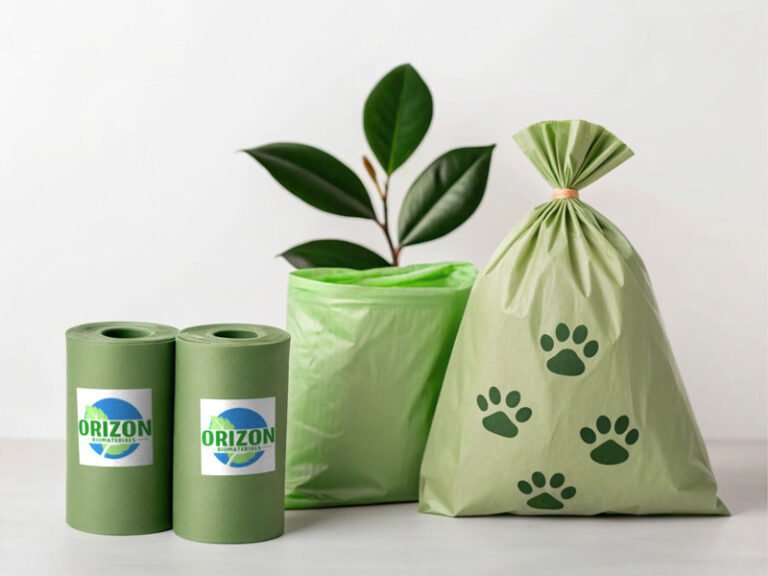
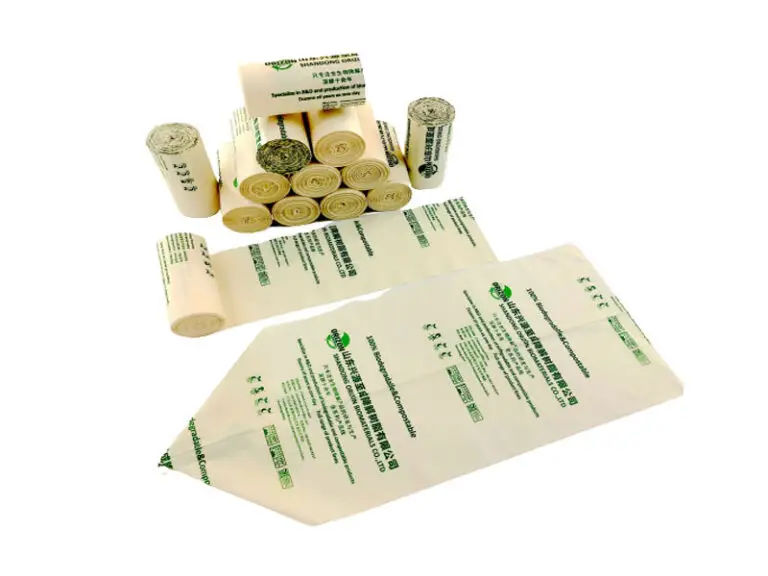
Many people ask what are compostable bags made of and whether these materials are truly environmentally friendly.
As more countries introduce plastic reduction policies, compostable bags are becoming an important alternative to traditional plastic bags.
However, many people still ask the same question: what are compostable bags made of?
Unlike conventional plastic bags made from petroleum-based polyethylene, compostable bags are produced using biodegradable polymers derived from renewable or compostable materials.
These materials are designed to break down in composting environments without leaving harmful residues.
This guide explains the main materials used in compostable bags and how they work in real composting systems.
For more information about compostable standards, see our guide to global compostable certifications.
Main Materials Used in Compostable Bags
Most compostable bags are produced using blends of biodegradable polymers. The most common materials include PLA, PBAT, and plant-based starch.
Combining these materials allows manufacturers to create bags that are flexible, durable, and compostable.wn faster and more completely than traditional plastics when properly composted.
PLA (Polylactic Acid)
PLA is one of the most widely used bioplastics in compostable packaging.
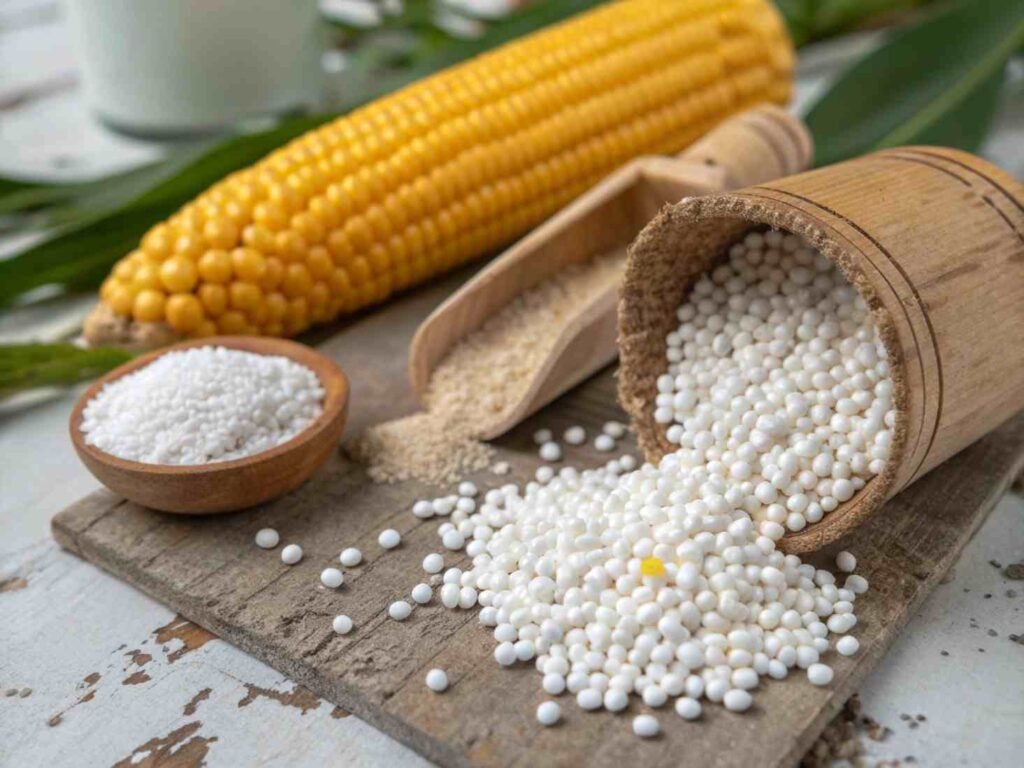
It is produced from renewable plant sources such as:
• corn starch
• sugarcane
• cassava
PLA provides transparency and rigidity, making it suitable for food packaging and compostable bags.
However, PLA alone can be brittle, which is why it is often blended with other biodegradable materials.
Learn more about material differences in PBAT vs PLA
Plant-Based Starch Materials
Many compostable bag formulations also include plant starch.
Common starch sources include:
• corn starch
• potato starch
• cassava starch
Starch helps improve biodegradability and reduces the overall reliance on synthetic polymers.
How Compostable Bag Materials Break Down
The materials used in compostable bags are designed to break down through microbial activity during composting.
Under the right conditions, microorganisms convert compostable plastics into:
• carbon dioxide
• water
• biomass
This process ensures that compostable bags do not leave microplastic fragments behind.
To guarantee proper degradation, many compostable materials must meet certification standards such as ASTM D6400 or EN 13432.
Are Compostable Bags Made from Plants?
Many compostable bags contain plant-based components, but they are usually made from blended materials rather than a single plant source.
A typical compostable bag formulation may include:
• PLA derived from plants
• PBAT biodegradable polymer
• natural starch materials
These blends help achieve the balance between strength, flexibility, and compostability.
Compostable Bags vs Traditional Plastic Bags
Traditional plastic bags are typically made from polyethylene derived from fossil fuels.
These plastics can persist in the environment for decades.
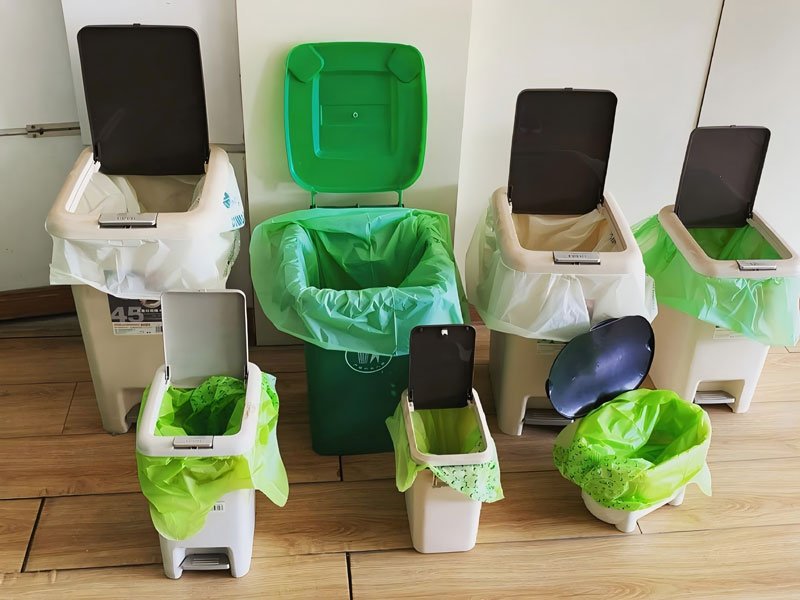
In contrast, compostable bags are designed to break down in composting environments and return to natural elements.
| Feature | Compostable Bags | Plastic Bags |
|---|---|---|
| Raw materials | PLA, PBAT, starch | Polyethylene |
| Degradation | Composting systems | Very slow |
| Microplastics | No residue | Possible |
| Environmental impact | Lower | Higher |
Common Uses of Compostable Bags
Compostable bags are widely used in many industries where organic waste is collected or where sustainable packaging is required.
Typical applications include:
• compostable garbage bags
• food waste collection bags
• compostable shopping bags
• compostable dog waste bags
• organic waste liners
See our solutions for compostable garbage bags.

Conclusion
Compostable bags are made from a combination of biodegradable materials such as PLA, PBAT, and plant-based starch.
These materials are engineered to provide durability while still allowing the bags to break down in composting environments.
Understanding what compostable bags are made of helps businesses and consumers make better decisions when choosing environmentally responsible packaging.
FAQ
What materials are compostable bags made from?
Most compostable bags are made from blends of PLA, PBAT, and plant-based starch materials designed to break down in composting systems.
Are compostable bags 100% plant-based?
Not always. Many compostable bags contain both plant-based materials and biodegradable polymers to improve flexibility and strength.
Do compostable bags leave microplastics?
Certified compostable bags must break down completely during composting and should not leave microplastic residues.
How can I verify compostable bag materials?
Buyers should check certification standards such as ASTM D6400, EN 13432, or BPI certification to ensure proper compostability.
[lastupdated]