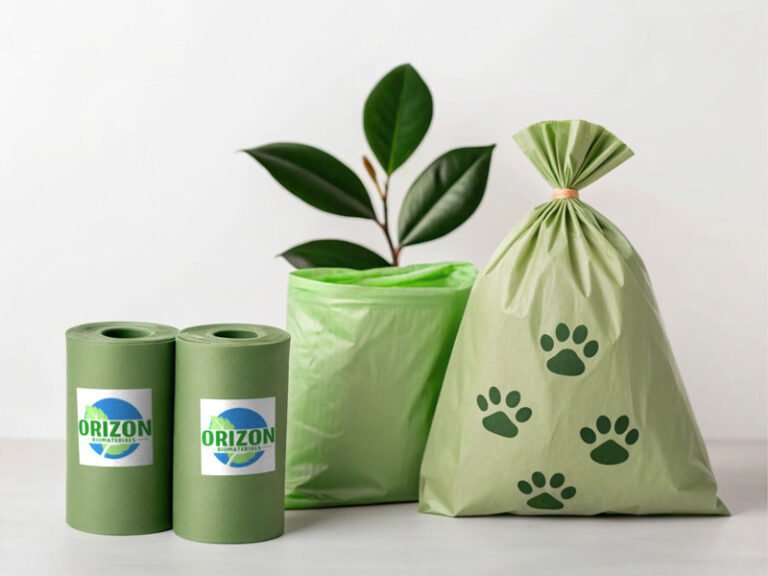
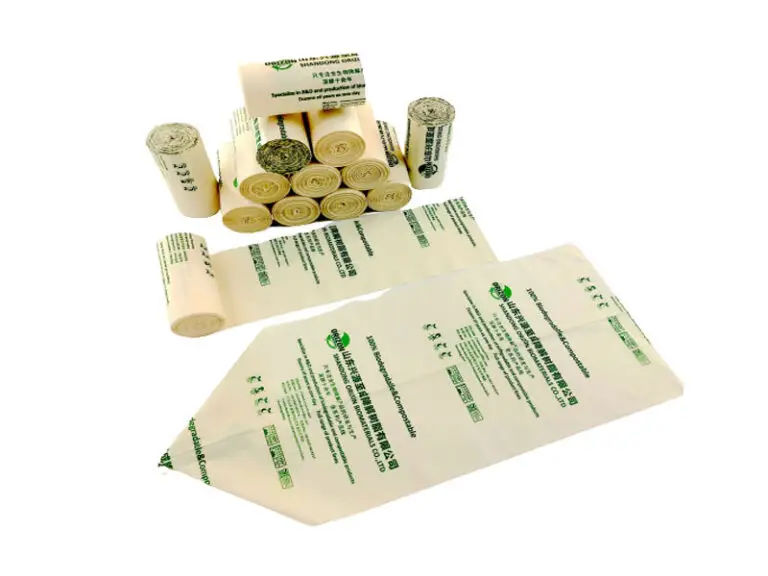
Corn starch bags are widely used as an eco-friendly alternative to traditional plastic bags. These bags are produced from biodegradable materials derived from renewable plant resources such as corn starch.
Understanding the corn starch bags manufacturing process helps businesses, packaging buyers, and sustainability professionals evaluate how compostable bags are produced and how their environmental performance is ensured.
In this guide, we explain how corn starch bags are made, from raw material preparation to final product inspection.
To understand the materials used in these bags, see What Are Compostable Materials.
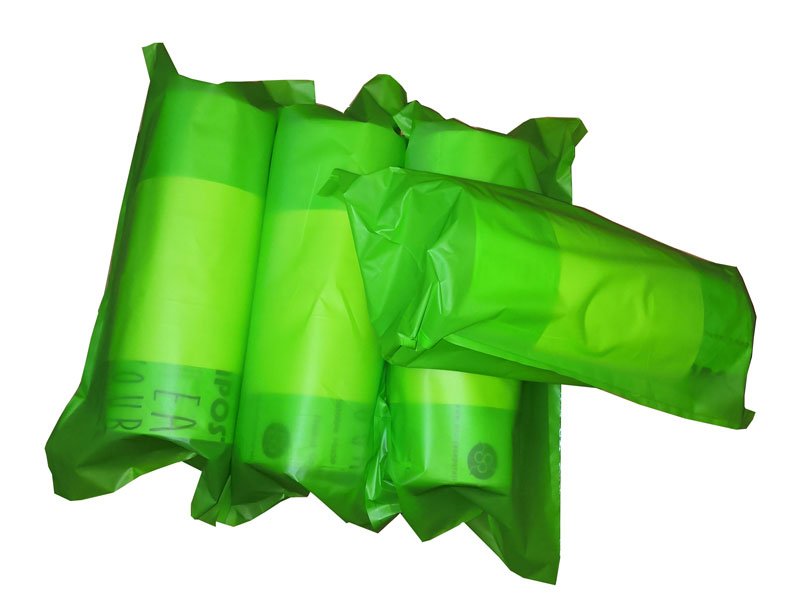
Raw Materials Used for Corn Starch Bags
The production of corn starch bags begins with biodegradable raw materials derived from renewable resources.
Typical materials include:
- corn starch
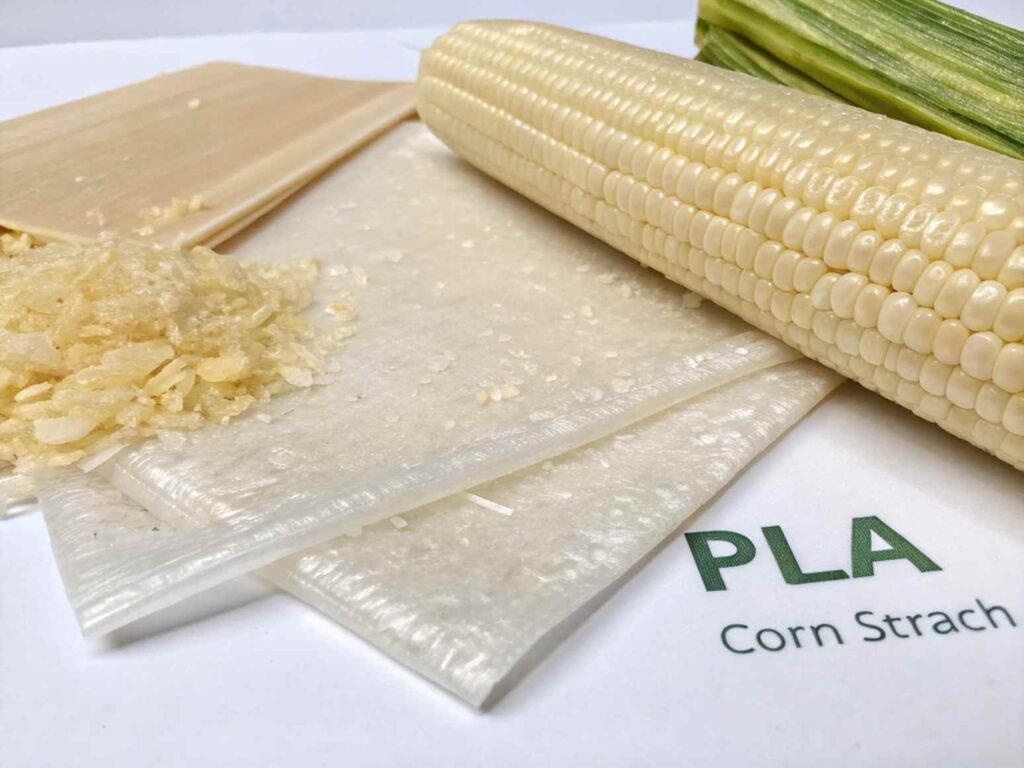
- PLA (polylactic acid)
- PBAT
- biodegradable additives
These materials are blended to achieve the required flexibility, strength, and compostability.
For example, PLA provides rigidity, while PBAT improves flexibility and tear resistance.
You can learn more about the material differences in PBAT vs PLA
Step 1: Material Mixing and Compounding
The first stage of the corn starch bag production process is material preparation.
Corn starch, PLA, PBAT, and additives are mixed in controlled proportions and processed in a compounding system.
During this stage:
- materials are heated
- polymers are melted and blended
- additives are evenly distributed
The result is a biodegradable plastic compound suitable for film production.
Step 2: Extrusion Process
After compounding, the material enters the extrusion stage.
In the extrusion machine:
- the material is heated to a molten state
- pressure forces the polymer through a circular die
- a continuous tube of plastic is formed
This stage prepares the material for film production.
Extrusion is a key step in many biodegradable bag manufacturing processes.
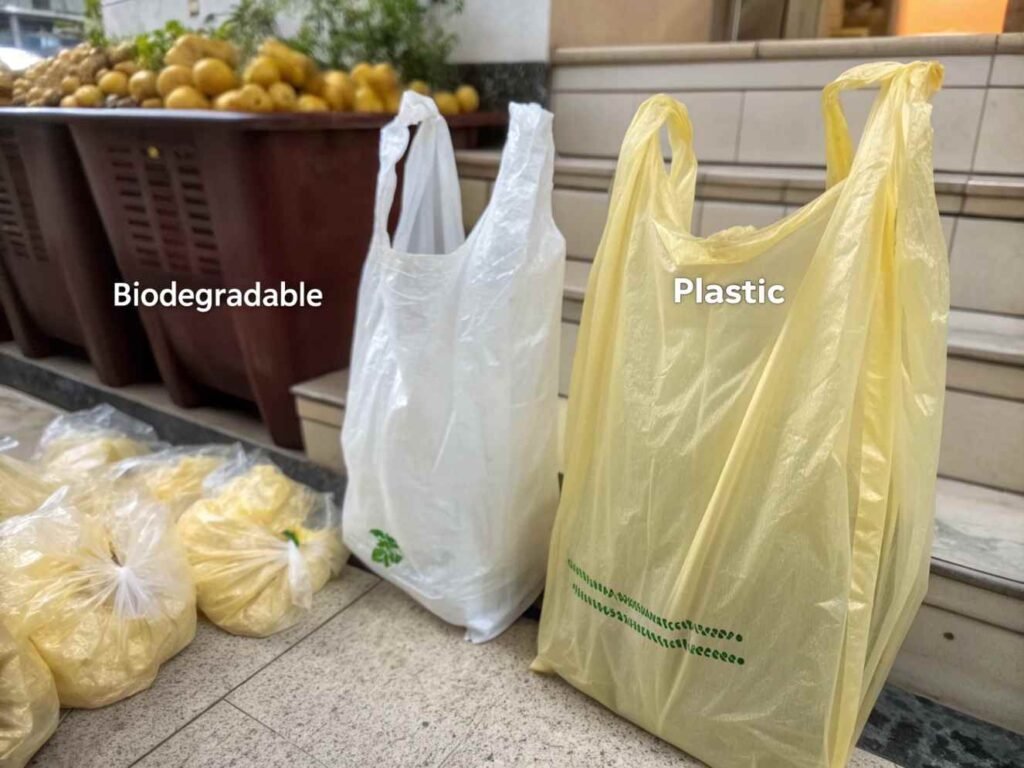
Step 3: Film Blowing
Film blowing converts the molten polymer tube into thin plastic film.
During the process:
- compressed air inflates the molten tube
- the film expands into a bubble
- cooling systems solidify the material
The thickness of the film is carefully controlled depending on the final bag application.
Common compostable bag thickness ranges from 12 to 35 microns.
Film blowing machines are widely used in the production of compostable garbage bags, shopping bags, and packaging films.
Step 4: Printing Process
If custom branding is required, the film is printed before bag conversion.
Printing methods may include:
- flexographic printing
- multi-color logo printing
- eco-friendly ink systems
Printed compostable bags are commonly used in retail packaging and food waste collection systems.

Step 5: Bag Conversion and Sealing
The printed film is then converted into finished bags using bag-making machines.
Typical processes include:
- cutting the film into bag shapes
- heat sealing the edges
- perforation for roll bags
- roll winding and packaging
This step determines the final bag size, sealing strength, and roll format.
Step 6: Quality Inspection
Before packaging, the bags undergo quality testing.
Common tests include:
- film thickness measurement
- tensile strength testing
- sealing strength testing
- compostability verification
Many compostable bags must also meet international certification standards.
To learn about certification systems, see Compostable Certifications Guide.
Standards such as ASTM D6400 and EN 13432 verify that compostable plastics can safely break down in industrial composting facilities.
Environmental Benefits of Corn Starch Bags
Compared with conventional petroleum-based plastics, corn starch bags offer several environmental advantages.
These include:
- renewable raw materials
- reduced fossil fuel dependence
- compostability under controlled conditions
However, proper disposal is essential.
Compostable plastics are designed to break down in industrial composting systems.
You can learn more about this process in What Is Industrial Composting.
Conclusion
The corn starch bags manufacturing process involves several carefully controlled stages, including raw material blending, extrusion, film blowing, printing, and bag conversion.
Each step plays an important role in ensuring that compostable bags meet the required performance and environmental standards.
As demand for sustainable packaging continues to grow, understanding how corn starch bags are produced helps businesses make informed decisions when sourcing compostable packaging solutions.
FAQ
What are corn starch bags made from?
Corn starch bags are made from plant-based materials such as corn starch, PLA, and PBAT. These biodegradable polymers provide flexibility and compostability.
Are corn starch bags biodegradable?
Yes. Most corn starch bags are designed to biodegrade in industrial composting environments when certified under standards such as ASTM D6400 or EN13432.
How long do corn starch bags take to degrade?
Under industrial composting conditions, certified compostable bags typically break down within several months depending on temperature and microbial activity.
Are corn starch bags better than plastic bags?
Corn starch bags are considered more environmentally friendly because they are derived from renewable resources and can biodegrade under composting conditions.