As more companies move toward sustainable packaging, compostable certifications have become essential for verifying environmental claims.
However, many buyers and brands are confused by different labels such as BPI, TÜV OK Compost, and ASTM D6400.
These certifications exist to ensure that materials labeled “compostable” actually break down safely in composting environments without leaving harmful residues.
In this guide, we explain the most important compostable certifications used worldwide and how they apply to compostable bags and packaging.
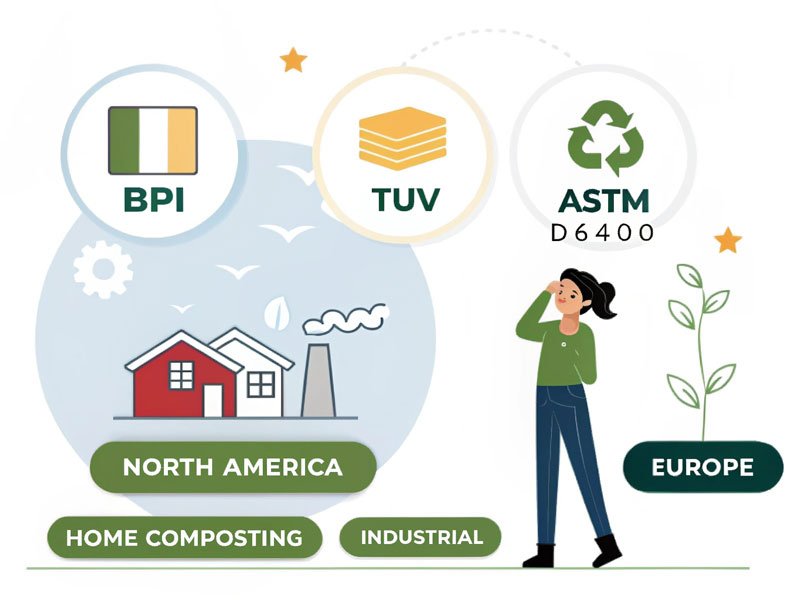
What Does “Compostable” Mean?
A compostable material is designed to break down into carbon dioxide, water, and biomass under specific composting conditions.
Unlike ordinary biodegradable materials, compostable materials must meet strict requirements regarding:
• biodegradation speed
• disintegration during composting
• absence of toxic residues
These requirements are verified through recognized certification systems.
Compostable vs Biodegradable
Many people confuse the terms compostable and biodegradable, but they are not the same.
| Feature | Compostable | Biodegradable |
|---|---|---|
| Requires certification | Yes | Usually no |
| Degradation timeframe | Defined | Undefined |
| Compost safety | Tested | Not guaranteed |
| Microplastic risk | No | Possible |
Because biodegradable claims are loosely regulated, certification systems are used to prevent greenwashing.
Why Compostable Certifications Matter
Compostable certifications provide independent verification that a product meets strict environmental standards.
Key benefits include:
Regulatory compliance
Many composting programs and retailers require certified products.
Consumer trust
Certification logos help consumers identify products that are truly compostable.
Environmental protection
Certified materials break down completely during composting and do not contaminate finished compost.
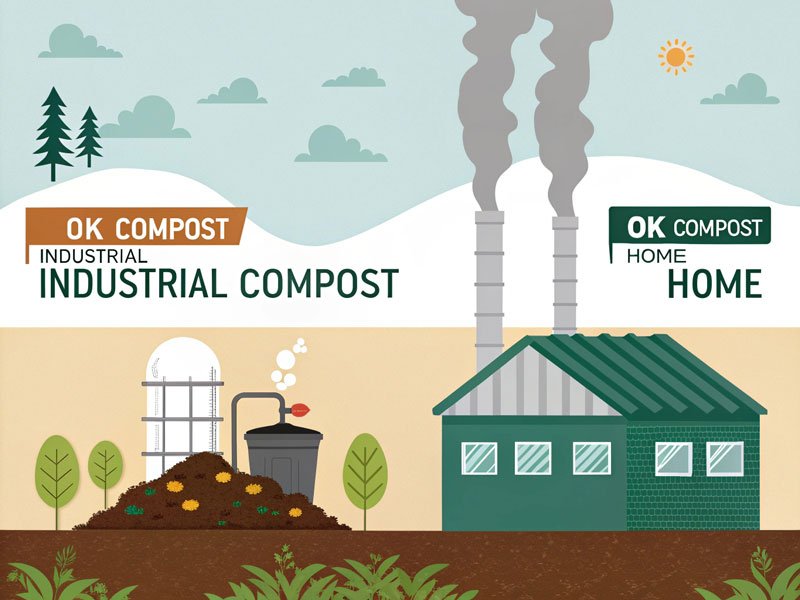
Industrial vs Home Composting Certifications
Compostable products may be designed for either industrial composting or home composting.
| Condition | Industrial Composting | Home Composting |
|---|---|---|
| Temperature | 50–60°C | 20–30°C |
| Microbial activity | Controlled | Natural |
| Decomposition speed | Faster | Slower |
| Certification examples | BPI, OK Compost INDUSTRIAL | OK Compost HOME |
Most compostable plastic bags are designed for industrial composting systems.
BPI Certification (North America)
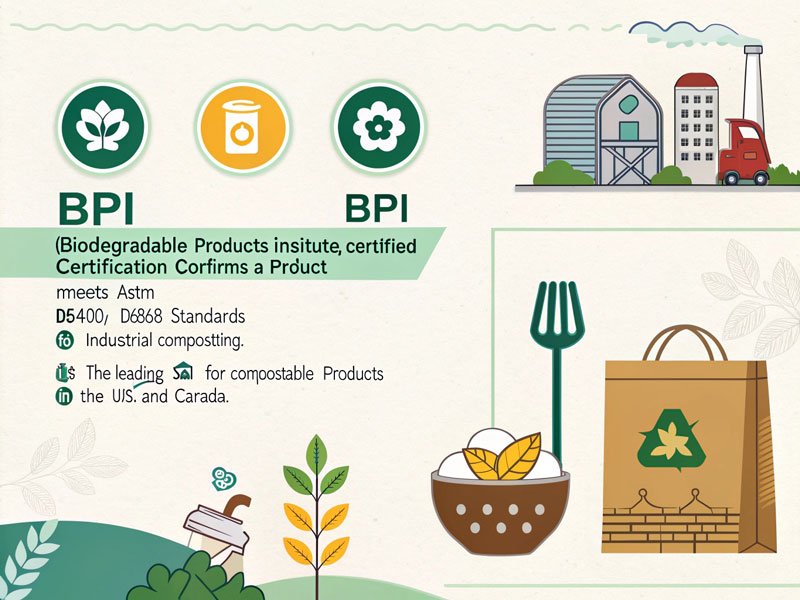
The BPI (Biodegradable Products Institute) certification is the most recognized compostable certification in North America.
It verifies that products comply with ASTM D6400 or ASTM D6868 testing standards.
Products certified by BPI include:
• compostable garbage bags
• compostable food packaging
• compostable shopping bags
To obtain certification, materials must pass tests for biodegradation, disintegration, and environmental safety.
TÜV OK Compost Certification (Europe)
In Europe and many international markets, compostability is verified through TÜV Austria certification.
Two major certification types exist:
OK Compost INDUSTRIAL
Based on EN 13432 standards for industrial composting.
OK Compost HOME
Used for materials designed to break down in backyard compost systems.
ASTM D6400 Standard
ASTM D6400 is a testing standard used in the United States to evaluate compostable plastics.
Although ASTM D6400 itself is not a certification program, it provides the technical testing framework used by certification bodies such as BPI.
Key requirements include:
• 90% biodegradation within 180 days
• disintegration during composting
• no harmful impact on plant growth
You can learn more in our full guide to ASTM D6400 certification.
Comparison of Major Compostable Certifications
| Certification | Region | Standard | Composting Type |
|---|---|---|---|
| BPI | North America | ASTM D6400 | Industrial |
| TÜV OK Compost | Europe | EN 13432 | Industrial / Home |
| ASTM D6400 | United States | Testing standard | Industrial |
Many manufacturers pursue multiple certifications to support global distribution.
How to Choose the Right Compostable Certification
When selecting compostable packaging, consider the following factors.
Target market
North America typically requires BPI certification, while Europe uses TÜV OK Compost.
Product type
Some products such as compostable garbage bags or dog waste bags may require different certifications depending on disposal conditions.
Distribution strategy
Brands selling globally often obtain dual certification to meet both EU and North American requirements.
Certification Process Overview
The typical certification process includes several steps:
1️⃣ Laboratory testing
2️⃣ Documentation submission
3️⃣ Certification review
4️⃣ Logo licensing approval
Testing typically includes biodegradation analysis, disintegration screening, and ecotoxicity testing.
Conclusion
Compostable certifications play a crucial role in ensuring that environmentally friendly packaging performs as expected in real composting systems.
Standards such as BPI certification, TÜV OK Compost, and ASTM D6400 provide independent verification that materials break down safely without harming the environment.
For businesses sourcing compostable packaging, understanding these certifications helps prevent greenwashing and ensures compliance with global sustainability regulations.
FAQ
What is the most common compostable certification?
BPI certification is the most widely used certification for compostable plastics in North America.
Can compostable bags break down in home compost?
Not always. Many compostable plastics require industrial composting conditions unless specifically certified as OK Compost HOME.
How long does compostable certification take?
Testing and certification can take several months depending on the material and certification body.
Related Articles
• What Is ASTM D6400
• PBAT vs PLA
• What Is BPI Certification