Film extrusion is the most important stage in compostable bag manufacturing. It is the process that transforms biodegradable resin materials into thin plastic films used for compostable packaging.
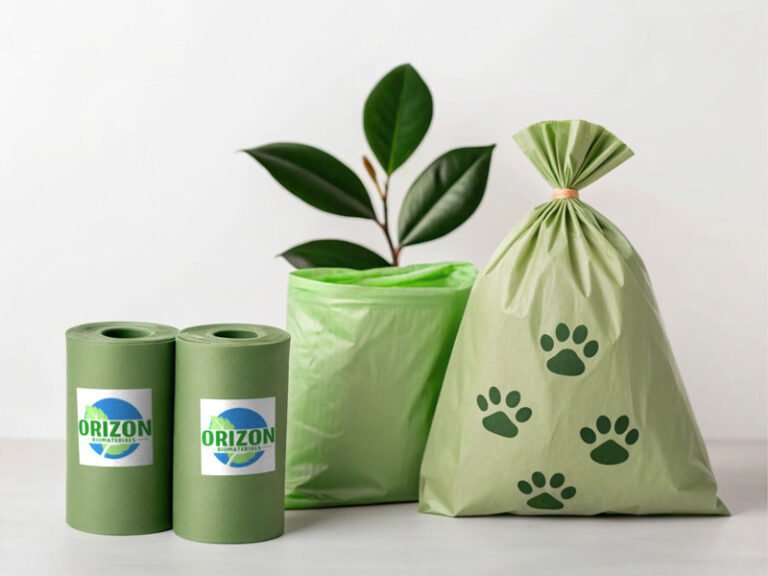
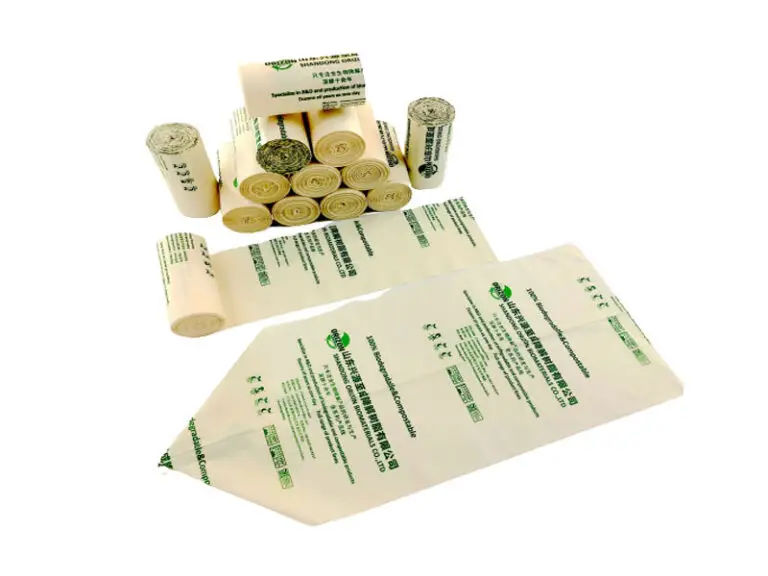
These films are later converted into products such as garbage bags, food waste liners, and shopping bags.
Understanding the compostable film extrusion process helps explain how biodegradable plastics are transformed into practical packaging materials.
For an overview of the entire manufacturing process, see compostable bag production process.
Raw Materials Used in Film Extrusion
The extrusion process begins with compostable polymer pellets.
Common biodegradable materials include:
• PLA (polylactic acid)
• PBAT (polybutylene adipate terephthalate)
• starch-based polymers
These materials are blended to achieve the required strength and flexibility.
Learn more about these materials in what compostable bags are made of
Step 1: Material Feeding
The compostable resin pellets are first loaded into the extrusion machine hopper.
The material then enters the extruder barrel where it is heated and melted.
Precise temperature control is important because biodegradable materials are more sensitive to heat compared with traditional plastics.
Step 2: Plastic Melting and Mixing
Inside the extrusion barrel, rotating screws melt and mix the compostable polymers.
This creates a uniform molten material that can be shaped into thin films.
The mixing stage ensures:
• consistent film strength
• stable material flow
• proper blending of polymers
Step 3: Blown Film Formation
The molten material passes through a circular die.
Air is injected to inflate the plastic into a bubble shape.
This technique is called blown film extrusion.
As the bubble expands upward, it cools and forms a thin biodegradable plastic film.
Step 4: Film Cooling and Flattening
The bubble is cooled by air rings around the die.
After cooling, the film is flattened into a double-layer sheet.
This sheet is then rolled onto large film rolls.
These rolls will later be used in the bag conversion process.
Importance of Film Thickness Control
Film thickness is one of the most important parameters in compostable bag manufacturing.
If the film is too thin, the bags may tear easily.
If the film is too thick, the bags may become unnecessarily expensive.
Manufacturers typically control film thickness within very narrow tolerances.
Quality Testing for Compostable Films
Before converting the film into bags, manufacturers often perform several tests:
• thickness measurement
• tensile strength test
• elongation test
• tear resistance test
These tests ensure the film meets performance requirements.
Certified compostable products may also need to comply with standards such as ASTM D6400
Conclusion
The compostable film extrusion process is the foundation of biodegradable bag manufacturing.
By transforming compostable polymers into flexible films, extrusion technology enables the production of sustainable packaging products used worldwide.
Understanding this process helps businesses evaluate manufacturing quality and supplier capabilities when sourcing compostable bags.
FAQ
What is blown film extrusion?
Blown film extrusion is a manufacturing process where melted plastic is inflated into a bubble to create thin plastic films used in packaging.
Can compostable plastics be extruded like traditional plastics?
Yes, compostable materials such as PLA and PBAT can be processed using extrusion technology, although temperature control is more sensitive.
What thickness are compostable films?
Compostable films are typically produced in thickness ranges between 10 microns and 50 microns depending on the application.
Are compostable films biodegradable?
Yes, compostable films made from certified materials can biodegrade in composting environments under proper conditions.