As sustainability becomes a priority for businesses and consumers, many products are marketed as biodegradable.
However, environmental claims can sometimes be confusing or misleading. Without verification, it is difficult to know whether a product truly breaks down safely in the environment.
This is where biodegradable certification plays an important role.
Biodegradable certification verifies that materials can break down naturally into harmless substances such as water, carbon dioxide, and biomass under defined conditions.
In this guide, we explain what biodegradable certification means, how it works, and the most common certification standards used worldwide.
What Is Biodegradable Certification?
Biodegradable certification is a third-party verification process used to confirm that a material can break down through natural biological processes.
Certification bodies test materials to ensure they decompose safely without leaving harmful residues or persistent plastic fragments.
These tests typically evaluate:
- biodegradation rate
- physical disintegration
- environmental safety
- heavy metal content
Certification helps ensure that environmental claims are scientifically verified rather than simply used for marketing purposes.reventing "greenwashing" — a practice where companies falsely advertise products as eco-friendly.
Biodegradable vs Compostable
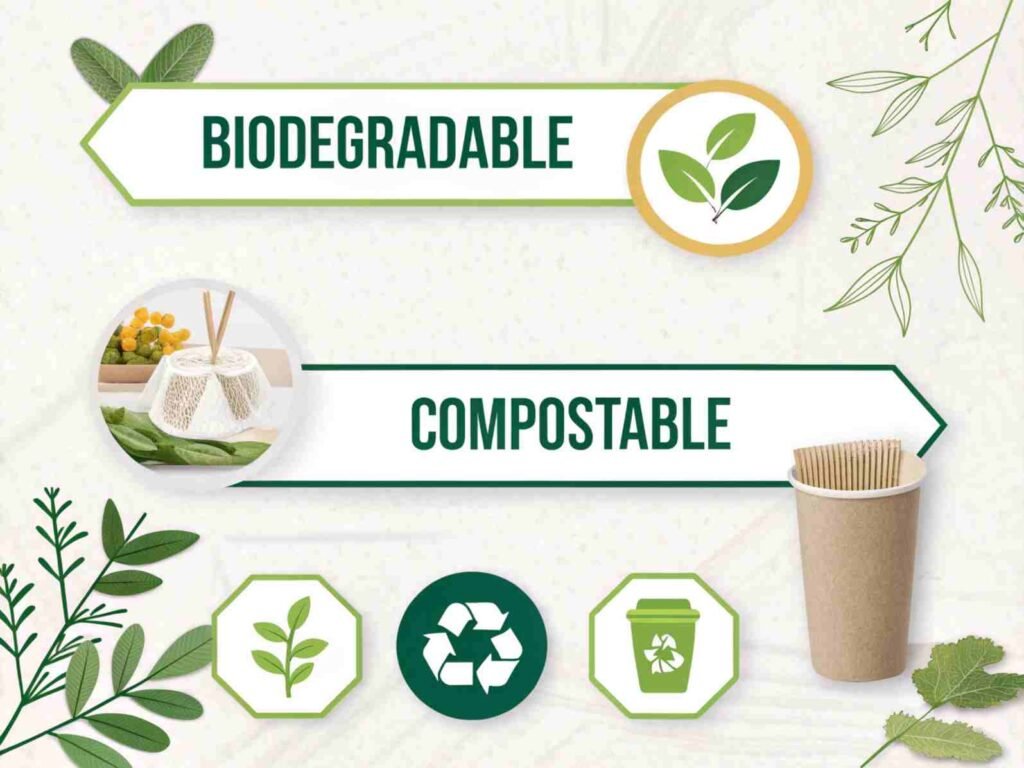
Many people confuse biodegradable and compostable, but the two terms have different meanings.
| Feature | Biodegradable | Compostable |
|---|---|---|
| Decomposition | Natural breakdown | Controlled composting |
| Timeframe | Not always defined | Strict time limits |
| Certification | Optional | Required |
| Environmental safety | May vary | Strict testing |
Compostable materials must meet stricter standards.
You can learn more in our guide to compostable certifications.
Why Biodegradable Certification Matters
Certification provides transparency and credibility in sustainability claims.
Prevent greenwashing
Without certification, companies may use vague environmental claims that are difficult to verify.
Build consumer trust
Certification logos help consumers identify products that truly meet environmental standards.
Support environmental regulation
Many markets require certification to label products as biodegradable or compostable.
Encourage sustainable product design
Certification standards push manufacturers to develop materials that safely break down at the end of their lifecycle.
Major Biodegradable Certification Standards
Several international certification systems verify biodegradable or compostable materials.
BPI Certification
BPI (Biodegradable Products Institute) is the most widely recognized certification body in North America.
BPI certification verifies compliance with standards such as ASTM D6400.
Learn more in our guide to BPI Certification.
TÜV Austria Certification
TÜV Austria provides the well-known OK Compost and OK Biodegradable certification programs used widely in Europe.
These certifications evaluate both industrial composting and home composting conditions.
EN13432 Standard
EN13432 is the primary European standard used to verify compostable plastics.
It requires materials to biodegrade and disintegrate under industrial composting conditions.
ABA Certification (Australia)
The Australasian Bioplastics Association (ABA) certifies compostable products under standards such as:
These certifications are widely used in Australia and New Zealand.
How Biodegradable Certification Works
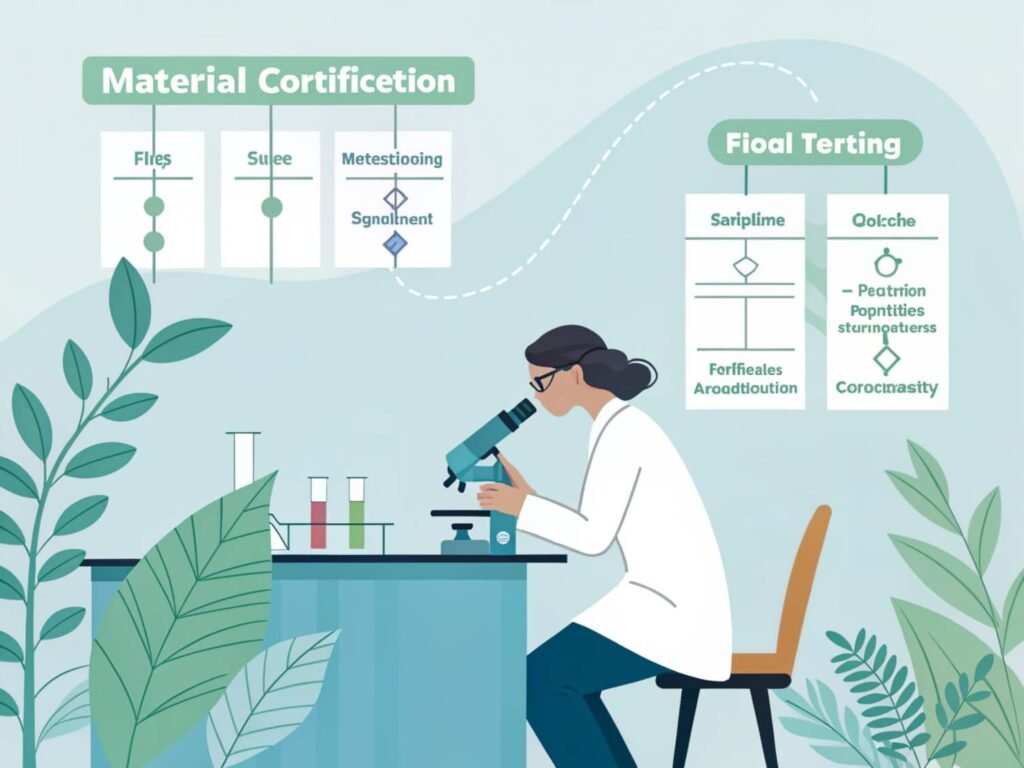
The certification process usually involves several stages.
1. Pre-assessment
Manufacturers submit product information and material composition to the certification body.
2. Laboratory testing
Independent laboratories test the product for biodegradation, disintegration, and environmental safety.
3. Certification review
Certification bodies review the testing data and supporting documentation.
4. Certification approval
If the product meets all requirements, the manufacturer receives permission to use the certification logo.
5. Ongoing compliance
Certification usually requires periodic renewal to ensure continued compliance.
Challenges of Biodegradable Certification
Although certification improves transparency, several challenges remain.
Consumer confusion
Many consumers still struggle to distinguish between biodegradable, compostable, and recyclable products.
Infrastructure limitations
Industrial composting systems are not available in every region.
Certification costs
Testing and certification can require significant financial investment.
Improper disposal
Even certified products must be disposed of correctly to achieve their environmental benefits.
The Future of Biodegradable Materials
Research and innovation continue to improve biodegradable materials and certification systems.
Key trends include:
- development of new biomaterials such as PHA
- stricter environmental regulations
- expansion of composting infrastructure
- increased adoption of life-cycle assessment (LCA)
These developments aim to improve the environmental performance of biodegradable materials across their entire lifecycle.
Conclusion
Biodegradable certification plays an important role in ensuring that environmental claims are supported by scientific testing.
By verifying that materials break down safely in natural or composting environments, certification helps prevent greenwashing and supports the transition toward sustainable materials.
For businesses and consumers seeking environmentally responsible products, understanding certification standards is essential for making informed decisions.