Many people switch to compostable bags to reduce plastic waste. But an important question remains:
Do compostable bags break down in landfills?
The short answer is no — in most cases compostable bags do not break down properly in landfills.
Compostable bags require specific conditions to decompose, including high temperatures, oxygen, moisture, and active microorganisms. These conditions exist in composting systems but are largely absent in modern landfills.
Without those conditions, compostable bags may remain intact for years, behaving similarly to conventional plastics.
To understand why, we need to look at how compostable bags work and how landfills are designed.
If you are unfamiliar with compostable materials, you may want to read our guide on what are compostable materials.

What Are Compostable Bags?
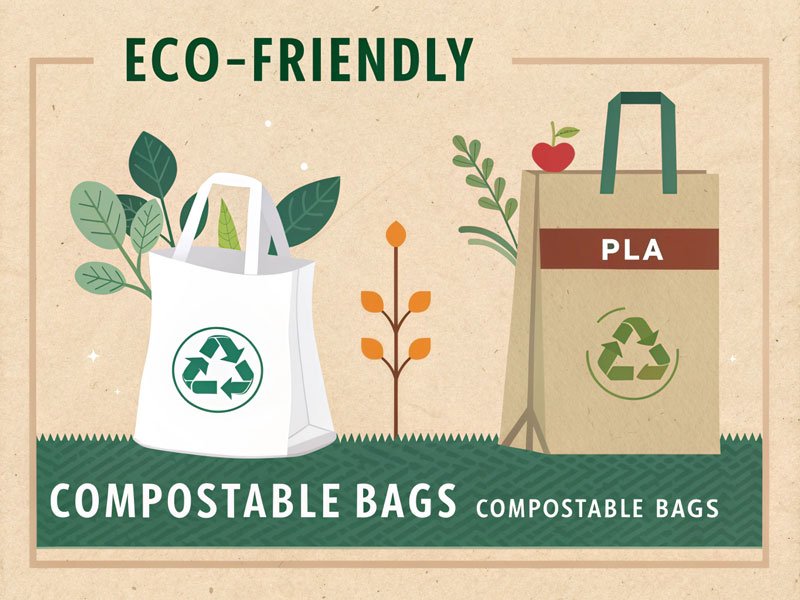
Compostable bags are bags made from compostable biopolymers such as:
-
PLA (polylactic acid)
-
PBAT
-
plant starch (corn or cassava)
These materials are designed to break down into natural elements such as:
- carbon dioxide
- water
- biomass
However, this decomposition only occurs under controlled composting conditions.
Many compostable bags are made from plant-based polymers that belong to the broader category of bioplastics.
Why Compostable Bags Need Special Conditions
For compostable bags to break down properly, several environmental factors must be present.
Heat
Industrial composting systems maintain temperatures of 50–70°C (122–158°F), which accelerate microbial activity.
Moisture
Moisture helps microorganisms break down organic materials and allows chemical reactions like hydrolysis to occur.
Oxygen
Composting is an aerobic process, meaning it requires oxygen for microorganisms to function.
Microbial Activity
Active bacteria and fungi break down organic matter into simpler compounds.
These conditions are typical in composting systems but are largely absent in landfills.
To understand this process in detail, see our article on industrial composting.
What Is the Environment Like in a Landfill?
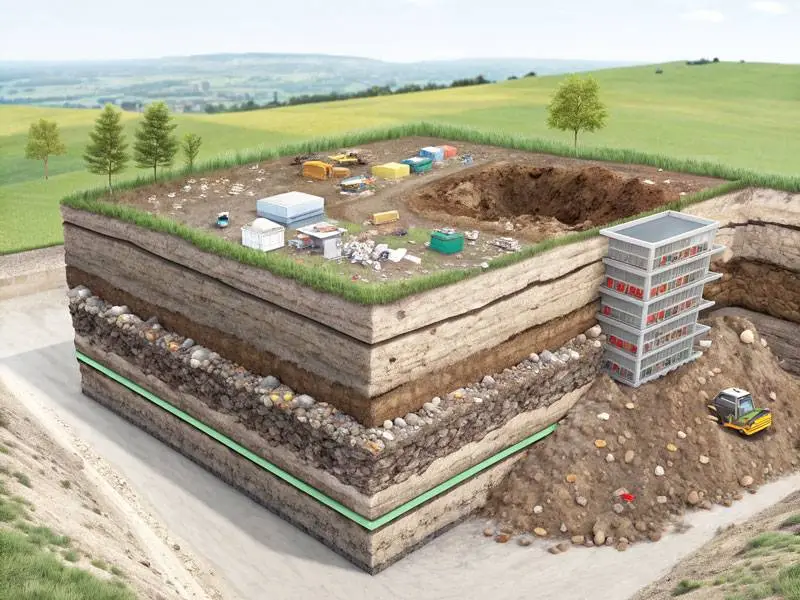
Modern landfills are designed to store waste safely, not to help it decompose quickly.
Landfills use engineered systems that limit the conditions needed for composting.
Compaction
Waste is compressed to save space, reducing air pockets that microorganisms need.
Limited Oxygen
Landfills are largely anaerobic environments, meaning oxygen levels are extremely low.
Moisture Control
Landfill liners and covers prevent water from entering the waste layers.
Because of these conditions, decomposition occurs extremely slowly.
Studies have shown that organic materials such as newspapers and food waste can remain recognizable for decades in landfill environments.
What Happens to Compostable Bags in Landfills?
When compostable bags enter landfill systems, several things can happen:
-
they may remain largely intact
-
they may slowly fragment over time
-
they may degrade extremely slowly under anaerobic conditions
However, they rarely break down into the harmless natural components that compostable materials are designed to produce.
This is why compostable products should ideally be diverted away from landfill.
Where Should Compostable Bags Be Disposed?
For compostable bags to break down properly, they need to go to a composting system.
The correct disposal option depends on the type of bag and local waste infrastructure.
Industrial Composting
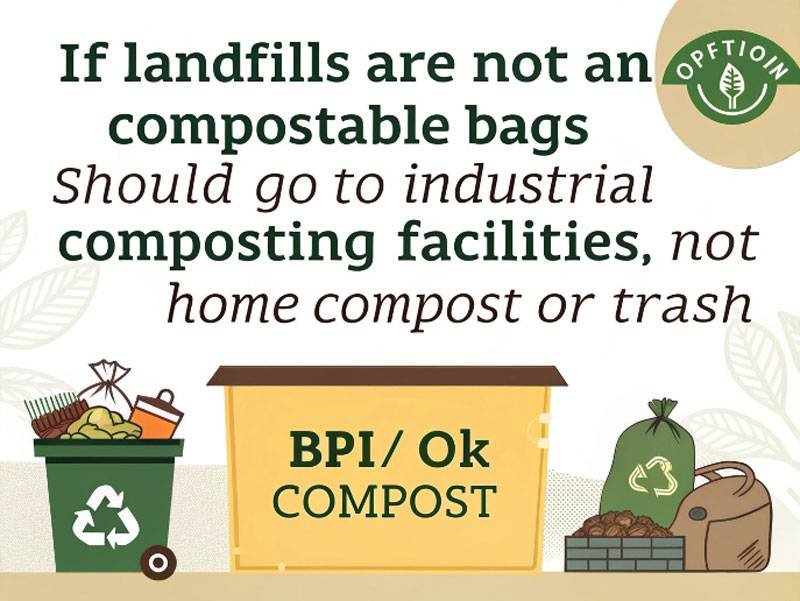
Most compostable bags are designed for industrial composting facilities, where temperature, oxygen, and microbial activity are controlled.
Home Composting
Only bags labeled home compostable are suitable for backyard compost systems.
Organic Waste Programs
Some cities allow certified compostable bags in green or organics bins, while others do not.
You can learn more in our article on can compostable bags go in the green bin.
Common Mistakes When Disposing of Compostable Bags
Many consumers unintentionally dispose of compostable bags incorrectly.
Throwing Them in Recycling
Compostable bags should never go in recycling bins because they contaminate plastic recycling streams.
Assuming Landfills Will Break Them Down
Landfills are not designed to compost materials.
Ignoring Certification Labels
Always check whether the bag is certified for industrial or home composting.
For detailed disposal guidance, see our article on how to dispose of compostable bags.
Better Alternatives to Reduce Waste
While compostable bags can help reduce plastic pollution, they are not a perfect solution.
Other options include:
-
reusable waste containers
-
paper liners
-
direct composting of food scraps
-
reducing single-use bags entirely
Reducing waste generation remains one of the most effective environmental strategies.
Conclusion
Compostable bags do not typically break down in landfills because landfill environments lack the heat, oxygen, moisture, and microbial activity required for composting.
To achieve their intended environmental benefit, compostable bags should be sent to composting systems rather than landfill.
When used and disposed of correctly, compostable bags can help reduce plastic pollution and support more sustainable waste management systems.
FAQ
Do compostable bags break down in landfills?
No. Compostable bags usually do not break down properly in landfill environments because landfills lack the oxygen and microbial activity required for composting.
Why don’t compostable bags decompose in landfills?
Landfills are compacted and largely anaerobic, meaning they contain very little oxygen. Compostable materials require oxygen and heat to break down efficiently.
How long do compostable bags take to break down?
In industrial composting facilities, compostable bags may break down within several weeks to a few months. In landfills, decomposition may take many years.
Can compostable bags go in recycling bins?
No. Compostable bags should not be placed in recycling bins because they contaminate plastic recycling systems.
Where should compostable bags be disposed of?
Compostable bags should ideally be sent to industrial composting facilities or organic waste collection programs that accept certified compostable products.