Plastic pollution has become one of the most significant environmental challenges worldwide. As industries look for alternatives to traditional petroleum-based plastics, PLA plastic (polylactic acid) has emerged as one of the most widely used bioplastics.
PLA is a plant-based polymer made from renewable materials such as corn starch, sugarcane, or cassava. Because of its compostability and lower carbon footprint compared with conventional plastics, PLA is increasingly used in sustainable packaging, food service products, and biodegradable bags.
As manufacturers working with compostable materials for more than 16 years, we have seen how PLA has become a key material in the transition toward certified compostable packaging.
This guide explains:
- What PLA plastic is
- How PLA is produced
- Whether PLA is biodegradable or compostable
- The advantages and limitations of PLA
- How PLA is used in packaging and manufacturing

PLA Definition (Featured Snippet)
PLA (polylactic acid) is a biodegradable thermoplastic polymer derived from renewable plant sugars such as corn starch or sugarcane. It is widely used in compostable packaging, disposable food containers, 3D printing materials, and biodegradable plastics.
Under industrial composting conditions, PLA can break down into:
- Carbon dioxide
- Water
- Organic biomass
Because PLA is produced from renewable resources rather than fossil fuels, it is considered one of the most important bioplastics in the global sustainable materials market.

How PLA Plastic Is Produced
PLA production begins with agricultural raw materials and ends with advanced polymer processing.
Raw Material Extraction
The process starts with plant-based resources such as:
- Corn starch
- Sugarcane
- Cassava
These materials contain sugars that can be fermented into lactic acid, the building block of PLA.
Fermentation
Microorganisms convert plant sugars into lactic acid through fermentation.
Polymerization
Lactic acid molecules are chemically polymerized into long molecular chains, forming polylactic acid (PLA).
Resin and Film Production
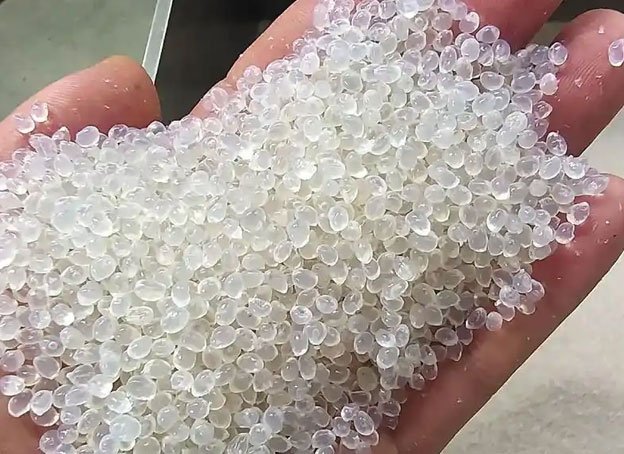
PLA resin can then be processed into various forms:
- plastic films
- molded containers
- fibers
- 3D printing filament
In compostable bag manufacturing, PLA is often combined with PBAT to improve flexibility and tear resistance.
For more details about PLA materials, see our guide to PLA compostable materials
Key Properties of PLA Plastic
PLA offers several properties that make it suitable for packaging and biodegradable plastics.
| Property | PLA Plastic |
|---|---|
| Raw material | Renewable plant resources |
| Transparency | High clarity |
| Strength | Good rigidity |
| Compostability | Industrial composting |
| Heat resistance | Moderate |
| Food safety | Suitable for food contact |
PLA is also biocompatible, which is why it is sometimes used in medical implants and biomedical applications.
However, PLA has a relatively low heat resistance, meaning it may soften at temperatures above 60°C.
Is PLA Biodegradable or Compostable?
One of the most common questions is whether PLA plastic is biodegradable.
The answer depends on the environment.
PLA is generally considered industrial compostable, meaning it decomposes effectively in controlled composting facilities.
These facilities maintain conditions such as:
- temperatures of 55–70°C
- controlled humidity
- high microbial activity
Under these conditions, PLA can break down within 90–180 days.
To understand how these facilities work, read our guide on industrial composting systems.
PLA vs Traditional Plastics
Compared with petroleum-based plastics, PLA offers several environmental advantages.
| Feature | PLA | Conventional Plastic |
|---|---|---|
| Raw material | Plant-based | Fossil fuels |
| Carbon footprint | Lower | Higher |
| Compostability | Yes (industrial) | No |
| Recycling compatibility | Limited | Widely established |
PLA reduces dependence on fossil resources and can contribute to lower lifecycle emissions.
However, its environmental benefits depend on proper waste management infrastructure.ndly fabrics, agricultural mulch, electronics, biodegradable parts, and even automotive components.
Applications of PLA in Packaging
PLA has become a widely used material across multiple industries.
Packaging
PLA is commonly used for:
- compostable trash bags
- produce bags
- food packaging containers
- courier mailers
- garment packaging
Food Service
PLA is used to manufacture:
- cups
- food trays
- disposable utensils
3D Printing
PLA filament is one of the most widely used materials in desktop 3D printing due to its easy processing and low odor.
Medical Applications
PLA can also be used in biodegradable implants and sutures.
Manufacturers working with sustainable materials increasingly adopt PLA for eco-friendly packaging products.

Advantages and Limitations of PLA
Advantages
PLA provides several environmental and manufacturing benefits.
- made from renewable plant materials
- lower carbon emissions than petroleum plastics
- industrial compostability
- compatible with food packaging
Limitations
Despite its advantages, PLA also has limitations.
- lower heat resistance
- requires industrial composting facilities
- limited recycling infrastructure
These challenges are driving ongoing research to improve PLA performance and waste management systems.
PLA in Compostable Bag Manufacturing
In compostable bag production, PLA is rarely used alone.
Instead, manufacturers combine PLA and PBAT polymers to achieve:
- improved flexibility
- stronger tear resistance
- better sealing performance
These blended materials are then processed through film extrusion and bag-making equipment to produce products such as:
- compostable trash bags
- pet waste bags
- produce bags
- courier mailers
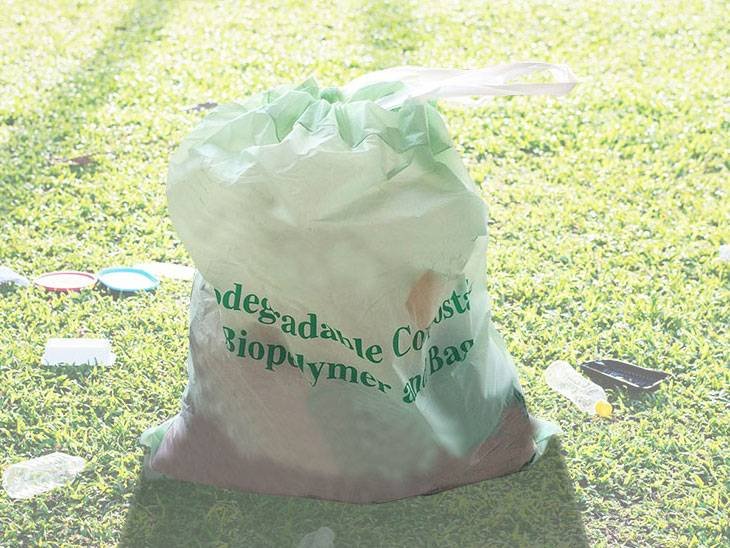
To ensure environmental claims are valid, products must meet compostable certification standards such as ASTM D6400 or EN 13432.
Future of PLA Materials
The global PLA market continues to grow rapidly as governments introduce regulations limiting single-use plastics.
Industry trends include:
- expansion of industrial composting infrastructure
- improved recycling technologies
- increased adoption in packaging and textiles
- development of high-heat PLA materials
These developments are expected to further expand the role of PLA in sustainable material systems.
Conclusion
PLA (polylactic acid) is one of the most widely used bioplastics in sustainable packaging. Derived from renewable plant resources, PLA provides a practical alternative to petroleum-based plastics for many applications.
While PLA requires industrial composting conditions for effective decomposition, it plays an important role in reducing reliance on fossil resources and supporting the transition toward circular material systems.
As global regulations and waste infrastructure continue to evolve, PLA is expected to remain a key material in the future of compostable packaging and biodegradable plastics.
FAQ
Is PLA plastic biodegradable?
PLA is biodegradable under industrial composting conditions, where heat and microorganisms allow the material to break down.
Is PLA compostable?
Yes. Most PLA products are industrially compostable and must meet certification standards such as ASTM D6400 or EN 13432.
Can PLA be recycled?
PLA can technically be recycled, but many recycling systems do not yet process it due to contamination concerns.
Is PLA safe for food packaging?
Yes. PLA is widely used for food containers and packaging and is considered food-contact safe.
What industries use PLA?
PLA is commonly used in packaging, food service products, 3D printing, textiles, and medical devices.
[lastupdated]