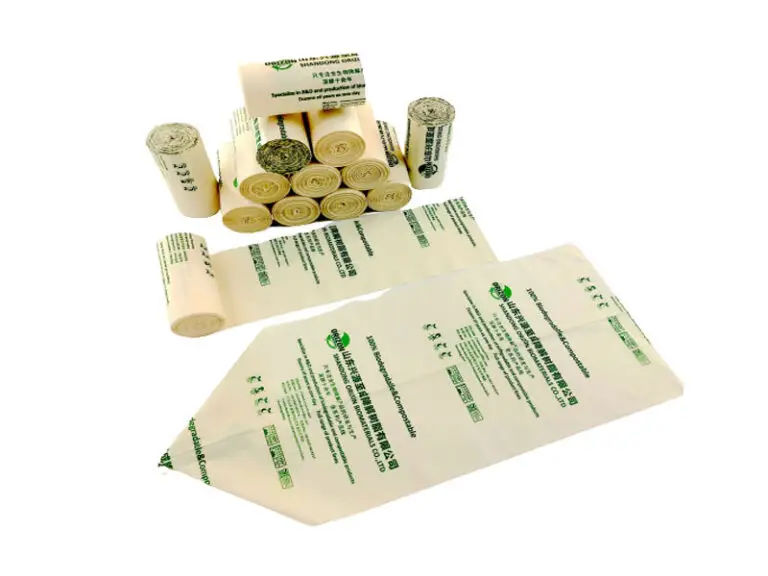
Why PBAT Is Often Misunderstood
PBAT is widely used in compostable bags, but many buyers still misunderstand what it is and how it works.
This can lead to wrong purchasing decisions and unrealistic expectations.
Understanding PBAT correctly is essential for selecting the right compostable products.
Misconception 1: PBAT Is Just Plastic
One common misunderstanding is that PBAT is the same as traditional plastic.
In reality, PBAT is a biodegradable polymer designed to break down under composting conditions.
Although it looks similar to plastic, its behavior in waste systems is very different.
Misconception 2: PBAT Alone Makes a Product Compostable
Some buyers believe that PBAT itself guarantees compostability.
However, compostable bags are usually made from a combination of materials, such as PLA and PBAT.
The final product must meet certification standards such as EN13432 or ASTM D6400.
Misconception 3: All PBAT Bags Perform the Same
Not all PBAT-based bags have the same quality.
Performance depends on:
- material formulation
- thickness control
- production process
This is why some bags tear easily while others perform well.
Misconception 4: Compostable Means Degrades Anywhere
Another common misunderstanding is that compostable bags degrade in any environment.
In reality, most compostable bags require industrial composting conditions.
Using them in landfills will not achieve the expected results.
What Buyers Should Focus On
Instead of focusing only on materials, buyers should consider:
- certification
- application scenario
- product performance
Working with a reliable compostable bags manufacturer can help ensure consistent quality and compliance.
Learn more: compostable bags manufacturer
Final Thoughts
Understanding PBAT correctly helps avoid costly mistakes and ensures better product performance.
For B2B buyers, knowledge is not just technical — it directly impacts business results.