As demand for sustainable packaging continues to grow, compostable bags are becoming an important alternative to traditional plastic bags. These bags are widely used for food waste collection, garbage disposal, shopping bags, and pet waste bags.
Many businesses and consumers are curious about how compostable bags are actually manufactured.
The compostable bag production process involves several specialized manufacturing steps, including material preparation, film extrusion, printing, bag conversion, and quality inspection.
Understanding this process helps buyers evaluate the quality and reliability of compostable bag suppliers.
To understand the raw materials used in these bags, see our guide to what compostable bags are made of.
Raw Materials for Compostable Bag Production
Before manufacturing begins, compostable polymers must be prepared and blended.
Most compostable bags are produced using biodegradable materials such as:
• PLA (polylactic acid)
• PBAT (polybutylene adipate terephthalate)
• plant-based starch materials
These materials are mixed to achieve the balance between flexibility, strength, and compostability.
To learn more about these materials, see PBAT vs PLA.
Step 1: Film Extrusion
The first major stage in compostable bag manufacturing is film extrusion.
In this process:
- Compostable resin pellets are heated and melted.
- The molten material is pushed through a circular die.
- Air pressure expands the material into a thin plastic bubble.
- The bubble cools and forms a continuous film.
This technique is known as blown film extrusion, and it is commonly used to produce biodegradable plastic films.
The thickness and strength of the film are carefully controlled during this step.
Step 2: Film Printing
After extrusion, the compostable film can be printed with branding or product information.
Flexographic printing is typically used for compostable bags because it allows high-speed printing on flexible materials.
Common printed information includes:
• company logos
• recycling instructions
• compostable certification marks
• product specifications
Printing inks used in compostable bags are usually selected to maintain environmental compatibility.
Step 3: Bag Conversion
Once the printed film is ready, it moves to the bag converting stage.
In this step, the film is cut and sealed into individual bags.
Depending on the product design, different bag formats can be produced:
• garbage bags
• shopping bags
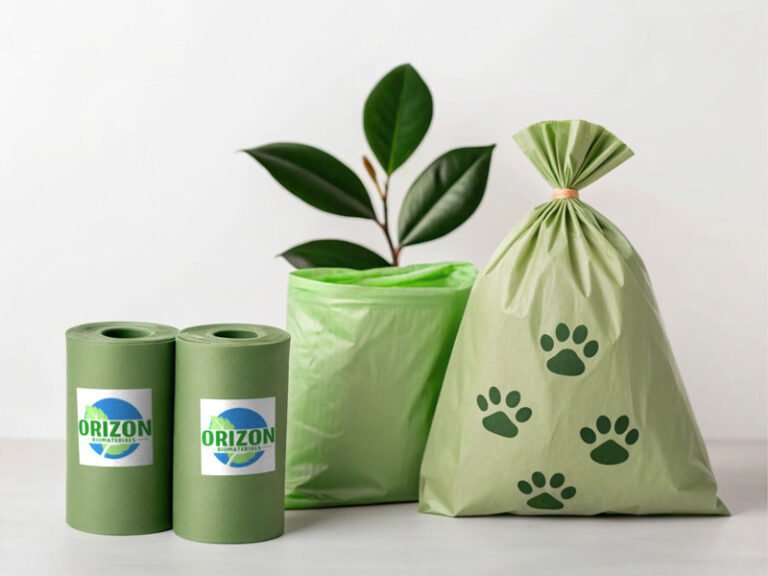
• dog waste bags
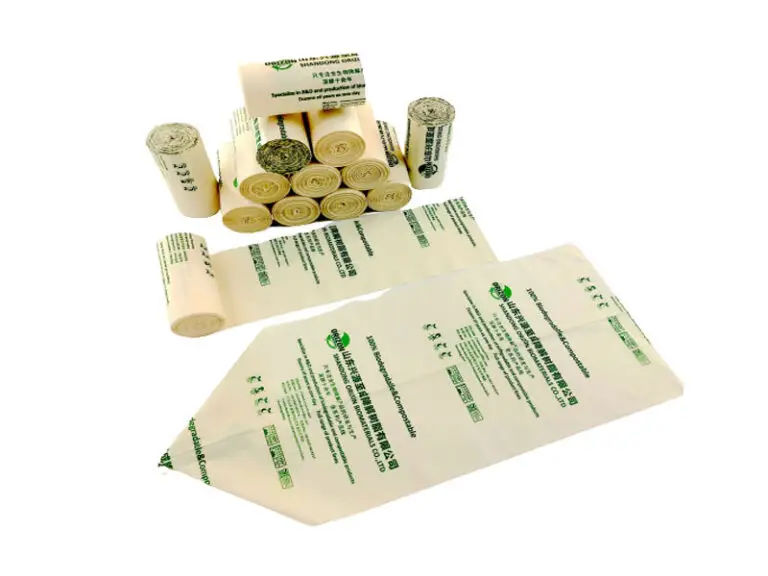
• roll bags
• flat bags
Machines seal the bottom and cut the bags to the required size.
Step 4: Rolling or Folding
For many products such as dog waste bags or kitchen waste liners, bags are placed into rolls.
During this step:
• bags are perforated for easy tearing
• rolls are wound automatically
• core tubes may be inserted
Some products are instead folded and packaged individually.
Step 5: Quality Inspection
Quality control is an essential part of compostable bag manufacturing.
Manufacturers typically test several key factors:
• film thickness consistency
• tensile strength
• tear resistance
• sealing strength
For certified compostable bags, additional testing ensures compliance with standards such as ASTM D6400 or EN 13432.
These standards confirm that the materials can break down properly in composting environments.
Packaging and Shipment
After inspection, compostable bags are packaged for distribution.
Typical packaging formats include:
• roll packaging
• retail boxes
• bulk cartons
Proper packaging protects the bags from moisture and heat, which can affect compostable materials.
Why Manufacturing Quality Matters
The manufacturing process directly affects the performance of compostable bags.
Poor manufacturing control can result in:
• weak bags
• inconsistent thickness
• poor sealing strength
Professional manufacturers use automated equipment and strict quality control systems to ensure product consistency.
See our solutions for compostable garbage bags.
Conclusion
The compostable bag production process involves several specialized steps, including material blending, film extrusion, printing, bag conversion, and quality inspection.
Each stage plays a critical role in ensuring that compostable bags perform reliably while meeting environmental standards.
By understanding how compostable bags are manufactured, businesses can better evaluate suppliers and choose high-quality sustainable packaging solutions.
FAQ
How are compostable bags manufactured?
Compostable bags are typically produced through a process that includes material blending, blown film extrusion, printing, bag conversion, and quality inspection.
Are compostable bags produced like plastic bags?
Yes. The manufacturing process is similar to traditional plastic bags, but compostable bags use biodegradable polymers instead of conventional polyethylene.
What machines are used to produce compostable bags?
The main equipment includes film extrusion machines, printing machines, bag converting machines, and automatic rolling or packaging machines.
Do compostable bags require special production equipment?
Many compostable bags can be produced using modified plastic bag equipment, but temperature control and material handling are important because compostable materials are more sensitive to heat.