As demand for sustainable packaging grows, many products are marketed as “biodegradable” or “compostable.” However, not all environmental claims are supported by legitimate certification.
For businesses sourcing compostable packaging—such as garbage bags, food waste liners, or dog waste bags—verifying certification is essential to avoid greenwashing and ensure compliance with waste management regulations.
This guide explains how to verify compostable certifications, what documents to check, and how buyers can confirm whether a supplier’s compostable products truly meet recognized international standards.
For a broader overview of global certification systems, see our Compostable Certifications Guide.
Why Verifying Compostable Certification Is Important
Certification ensures that compostable plastics meet strict requirements for biodegradation, disintegration, and environmental safety.
Without proper verification, products labeled as compostable may:
• contain conventional plastics
• leave microplastic residue
• fail to break down in composting facilities
• be rejected by municipal waste programs
Verifying certification helps buyers ensure that the product complies with recognized composting standards and can be safely processed in composting infrastructure.
The Most Common Compostable Certifications
Several internationally recognized certifications are used to verify compostable plastics.
ASTM D6400 (United States)
ASTM D6400 is the primary compostable plastics standard used in the United States for industrial composting environments.
Learn more in our guide: What Is ASTM D6400?
EN 13432 (European Union)
EN 13432 is the European compostable packaging standard and is widely used for compostable plastics across EU markets.
Read the full explanation here: EN 13432 Certification Guide
BPI Certification
BPI (Biodegradable Products Institute) is a third-party certification body that verifies products meet ASTM D6400 requirements.
More details: What Is BPI Certification?
AS4736 and AS5810 (Australia)
Australia uses two compostable standards:
• AS4736 for industrial composting
• AS5810 for home composting
Comparison guide: AS4736 vs AS5810
OK Compost Certification (TÜV Austria)
TÜV Austria provides globally recognized certification for both industrial compost and home compost environments.
Read more: OK Compost Certification Guide
Step-by-Step: How to Verify Compostable Certification
Buyers can follow these steps to confirm whether compostable products are legitimately certified.
Step 1: Check the Certification Logo
Certified compostable products usually display official certification marks such as:
• BPI Certified Compostable
• TÜV Austria OK Compost
• Seedling Logo (EN 13432)
However, logos alone are not sufficient proof. They must correspond to a valid certification record.
Step 2: Verify the Certification Number
Most certification bodies maintain public databases where certification numbers can be verified.
Examples:
• BPI Product Catalog
• TÜV Austria certification database
• ABA certification database for Australian standards
Buyers can search these databases to confirm whether the product is officially certified.
Step 3: Request Certification Documents
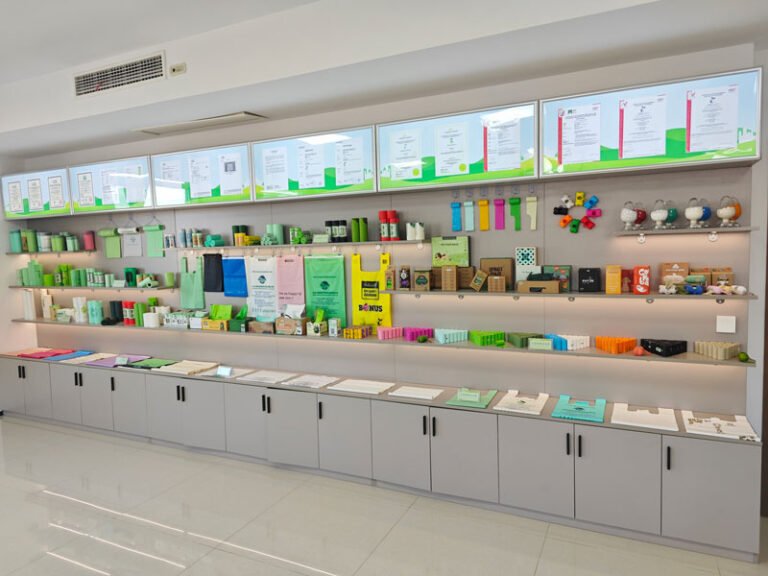
Reliable suppliers should provide official certification documentation, including:
• certification certificate
• test reports from accredited laboratories
• product specification sheets
These documents confirm that the material meets compostable testing standards.
Step 4: Check Material Composition
Certified compostable plastics are typically produced using biodegradable polymers such as:
• PLA (polylactic acid)
• PBAT (polybutylene adipate terephthalate)
• plant-based starch blends
To understand material differences, see PBAT vs PLA.
Step 5: Confirm Certification Scope
Certification applies to specific products and thickness ranges.
For example:
• garbage bags
• shopping bags
• packaging films
If a product’s thickness or formulation changes, certification may no longer apply.
Common Signs of Fake Compostable Claims
Buyers should be cautious of products that:
• claim to be “biodegradable” without certification
• show unofficial or untraceable logos
• lack documentation or certification numbers
Legitimate compostable products must pass strict testing standards and provide transparent certification records.
What Documents Buyers Should Request
When evaluating suppliers, professional buyers typically request:
• certification certificates
• product technical data sheets
• compostability test reports
• material safety information
These documents help ensure compliance with regulatory requirements and waste system compatibility.
Conclusion
Verifying compostable certification is a critical step when sourcing sustainable packaging products.
International standards such as ASTM D6400, EN 13432, BPI certification, AS4736, and OK Compost ensure that compostable plastics break down safely and do not contaminate composting systems.
By checking certification logos, verifying certification numbers, and reviewing supplier documentation, buyers can confidently source compostable packaging that meets global environmental standards.
FAQ
How can I check if a compostable product is certified?
You can verify certification by checking the certification number in official databases provided by organizations such as BPI, TÜV Austria, or ABA.
Are biodegradable and compostable the same?
No. Biodegradable materials may break down slowly and unpredictably, while certified compostable materials must meet strict testing standards for composting systems.
See our comparison guide : Compostable vs Biodegradable
Do all compostable bags need certification?
Certification is not always legally required, but many composting programs and retailers require certified products before accepting them in waste systems.
Can uncertified compostable bags be used in composting facilities?
Many facilities only accept certified compostable products, as uncertified materials may contaminate compost streams.