As Australia expands food waste collection programs and sustainable packaging regulations, compostable materials are becoming increasingly important for waste management systems.
However, not all compostable certifications mean the same thing.
Two of the most important compostable standards used in Australia are AS4736 and AS5810. While both relate to compostable materials, they apply to different composting environments.
Understanding the difference between these two certifications is essential when sourcing compostable bags for food waste collection, retail packaging, or municipal waste programs.
For a broader overview of global compostable standards, see our guide to compostable certifications.
What Is AS4736?
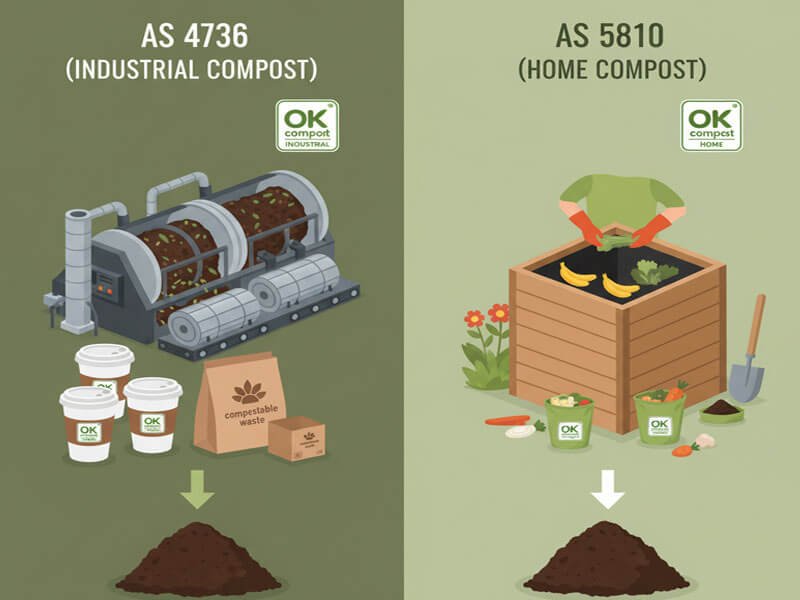
AS4736 is the Australian Standard for industrially compostable plastics.
It defines the requirements for plastic materials that are designed to break down in commercial composting facilities, where temperature, moisture, and microbial activity are carefully controlled.
Products that meet AS4736 must pass several key tests, including:
• biodegradation performance
• disintegration during composting
• heavy metal limits
• plant toxicity testing
These requirements ensure that compostable plastics break down completely without contaminating the finished compost.
AS4736 is technically similar to international standards such as ASTM D6400 and EN 13432, which are widely used in the United States and Europe.
What Is AS5810?
AS5810 is the Australian Standard for home compostable plastics.
Unlike AS4736, which is designed for industrial composting facilities, AS5810 applies to products that can break down in home compost systems.
Home compost environments are significantly different because they usually have:
• lower temperatures
• less consistent moisture levels
• slower microbial activity
To pass AS5810 certification, compostable materials must demonstrate effective degradation under these less controlled conditions.
This standard is often required for products intended for household compost bins or backyard compost systems.
AS4736 vs AS5810: Key Differences
Although both standards relate to compostable plastics, their intended environments are different.
| Feature | AS4736 | AS5810 |
|---|---|---|
| Composting environment | Industrial composting | Home composting |
| Typical temperature | 55–60°C | Lower temperatures |
| Degradation speed | Faster | Slower |
| Common applications | Food waste liners, commercial compost bags | Home compost bags |
| Certification body | ABA / TÜV Austria | ABA / TÜV Austria |
In general, AS5810 certification is more demanding, because materials must degrade in cooler and less controlled compost conditions.
Why These Certifications Matter in Australia
Australia has introduced various food waste and organic waste collection programs, often referred to as FOGO (Food Organics Garden Organics).
Many municipalities require certified compostable liners that comply with AS4736 in order to be accepted in their composting systems.
Without recognized certification, compostable bags may be rejected by composting facilities.
These standards help ensure:
• compatibility with composting infrastructure
• reliable material degradation
• prevention of microplastic contamination
Businesses supplying compostable packaging to the Australian market should therefore verify compliance with local certification requirements.
Materials Used in Certified Compostable Bags
Most certified compostable bags are produced using blends of biodegradable polymers such as:
• PLA (polylactic acid)
• PBAT (polybutylene adipate terephthalate)
• plant-based starch materials
These materials provide flexibility, durability, and compostability when processed under the appropriate conditions.
To understand the material differences, see PBAT vs PLA.
Typical Applications of AS4736 and AS5810 Bags
Certified compostable bags are widely used across multiple industries.
Common applications include:
• food waste collection bags
• compostable garbage bags
• compostable shopping bags
• compostable dog waste bags
• organic waste bin liners
For commercial supply options, see our compostable garbage bags solutions.
How to Verify AS4736 or AS5810 Certification
When sourcing compostable bags for the Australian market, buyers should verify certification documentation before placing orders.
Important steps include:
Check certification logos
Products that meet the standards usually carry certification marks such as:
• ABA Seedling logo
• TÜV Austria OK Compost
• Home Compost certification marks
Verify certification numbers
Certification bodies maintain public databases that allow buyers to confirm the validity of certification numbers.
Request supplier documentation
Professional manufacturers should be able to provide:
• certification certificates
• laboratory testing reports
• product specifications
These documents ensure transparency and compliance within the supply chain.
Conclusion
AS4736 and AS5810 are the two primary compostable certification standards used in Australia.
While both relate to compostable plastics, they apply to different composting environments.
AS4736 focuses on industrial composting systems, while AS5810 ensures materials can break down in home compost conditions.
Understanding the difference between these certifications is essential for businesses sourcing compostable packaging for the Australian market.
FAQ
What is the difference between AS4736 and AS5810?
AS4736 applies to industrial composting facilities, while AS5810 applies to home compost systems where temperatures and conditions are less controlled.
Is AS5810 stronger than AS4736?
AS5810 is generally considered more demanding because materials must degrade under lower temperatures typical of home compost environments.
Are AS4736 bags accepted in home compost?
Not necessarily. Bags certified only under AS4736 are designed for industrial composting and may not break down efficiently in home compost systems.
What certification do Australian councils require?
Many municipal composting programs require AS4736 certified compostable liners for food waste collection systems.