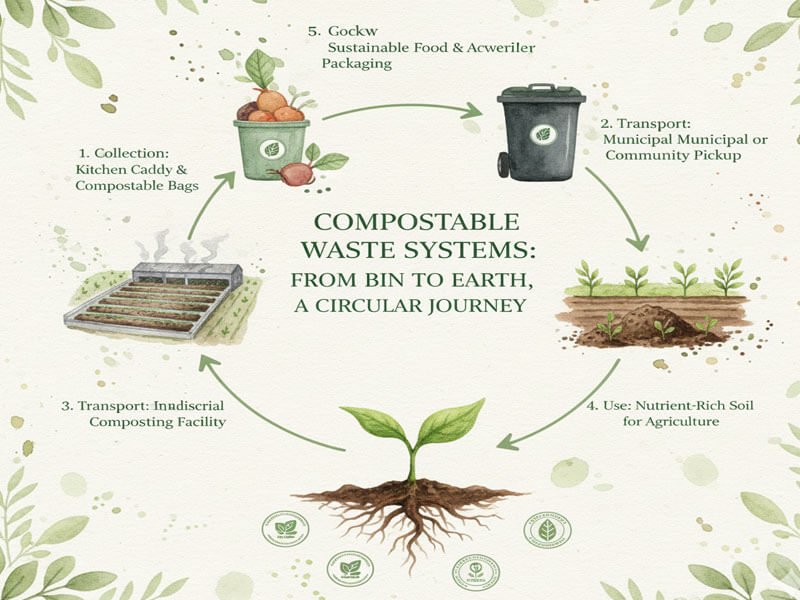
As cities and governments work to reduce landfill waste, compostable waste systems are becoming an essential part of modern waste management infrastructure.
These systems are designed to collect organic waste such as food scraps, yard waste, and compostable packaging and process it in specialized composting facilities. When managed properly, compostable waste systems transform organic waste into nutrient-rich compost while reducing greenhouse gas emissions and landfill pressure.
However, compostable waste systems only work when the entire infrastructure—from collection to processing—is properly designed.
This guide explains how compostable waste systems function and why infrastructure is critical for compostable materials to deliver real environmental benefits.
What Are Compostable Waste Systems?
Compostable waste systems are organized waste management frameworks designed to collect, transport, and process organic materials through composting rather than landfill disposal.
These systems typically handle:
- food waste
- yard waste
- compostable packaging
- compostable bags and liners
Instead of sending these materials to landfill, compostable waste systems direct them to composting facilities where microorganisms break them down into soil amendments.
To understand how compostable materials degrade during this process, see our guide on compostable plastic degradation.
Why Waste Infrastructure Matters for Compostable Materials
Many compostable products require specific environmental conditions to break down properly.
These conditions include:
- high temperatures
- controlled moisture
- oxygen supply
- microbial activity
These conditions are rarely present in landfills.
Because of this, compostable materials rely on proper waste infrastructure to ensure they are processed correctly.
Without appropriate composting infrastructure, even certified compostable products may fail to degrade efficiently.
You can learn more about this issue in our article on do compostable bags break down in landfills.
Key Components of Compostable Waste Infrastructure
A functioning compostable waste system typically includes several interconnected components.
1. Organic Waste Collection
The first step in compostable waste systems is collecting organic materials from households, businesses, and institutions.
Common collection methods include:
- curbside green bin programs
- commercial food waste collection
- municipal yard waste pickup
- community compost drop-off locations
In many regions, residents use green bins to separate organic waste from regular garbage.
Rules for these systems vary by location. Learn more in our guide on whether compostable bags can go in green bins.
2. Waste Sorting and Pre-Processing
Once organic waste is collected, it must be sorted to remove contamination.
Common contaminants include:
- plastic packaging
- metal
- glass
- non-compostable materials
Sorting may involve:
- mechanical screening systems
- manual inspection
- optical sorting technologies
Reducing contamination is essential for producing high-quality compost.
3. Industrial Composting Facilities
The core of compostable waste infrastructure is the industrial composting facility.
These facilities provide the environmental conditions required for rapid organic waste decomposition.
Typical industrial composting conditions include:
Temperature: 55–70°C
Moisture: controlled
Aeration: continuous oxygen supply
Processing time: 60–180 days
Industrial composting facilities are specifically designed to handle compostable plastics and packaging.
For a detailed explanation, see our guide to industrial composting.
4. Compost Processing and Maturation
After the active composting stage, organic materials enter a curing or maturation phase.
During this stage:
- microbial activity stabilizes
- organic matter continues decomposing
- nutrients develop in the compost
The result is finished compost that can be used in:
- agriculture
- landscaping
- soil restoration
- erosion control
Types of Compostable Waste Systems
Different regions use different composting systems depending on infrastructure and population density.
Municipal Composting Programs
Many cities operate large-scale composting systems integrated with municipal waste management.
Examples include:
- curbside food waste collection
- municipal compost facilities
- public organic waste drop-off sites
These programs help divert large volumes of organic waste from landfills.
Commercial Food Waste Systems
Restaurants, supermarkets, and food processors often generate significant organic waste.
Commercial composting systems collect:
- food scraps
- expired produce
- compostable packaging
These materials are transported to industrial composting facilities for processing.
Community Composting
Smaller communities may operate decentralized composting programs.
Examples include:
- community garden compost systems
- neighborhood compost hubs
- farmer market collection programs
These smaller systems help reduce transportation costs and engage local communities.
Challenges Facing Compostable Waste Systems
Despite their benefits, compostable waste systems face several challenges.
Contamination
Non-compostable plastics often enter organic waste streams, reducing compost quality.
Limited Infrastructure
Many regions lack industrial composting facilities capable of processing compostable plastics.
Consumer Confusion
Consumers may confuse:
- biodegradable plastics
- compostable plastics
- recyclable plastics
Proper labeling and public education are essential.
You can learn more about correct disposal methods in our guide on how to dispose of compostable bags.
The Role of Compostable Packaging in Waste Systems
Compostable packaging can support organic waste systems when designed and disposed of properly.
Examples include:
- compostable food waste bags
- compostable produce bags
- compostable trash liners
- compostable packaging films
These products help collect organic waste efficiently and can be processed alongside food waste in composting facilities.
However, proper certification is important to ensure compatibility with composting systems.
The Future of Compostable Waste Infrastructure
Governments worldwide are investing in organic waste infrastructure to reduce landfill use and support circular economy goals.
Key trends include:
- expansion of food waste collection programs
- increased industrial composting capacity
- stricter organic waste diversion laws
- improved compostable packaging standards
As infrastructure improves, compostable materials will play a larger role in sustainable waste management systems.
Conclusion
Compostable waste systems are a critical component of modern waste infrastructure.
By collecting organic waste and processing it through composting facilities, these systems reduce landfill pressure, lower greenhouse gas emissions, and return nutrients to the soil.
However, compostable products can only deliver their environmental benefits when supported by appropriate waste infrastructure.
Understanding how compostable waste systems operate helps individuals, businesses, and municipalities make better decisions about organic waste management.
FAQ
What are compostable waste systems?
Compostable waste systems are waste management infrastructures designed to collect and process organic materials through composting instead of landfill disposal.
Why do compostable materials need waste infrastructure?
Compostable materials require controlled conditions such as heat, moisture, oxygen, and microorganisms to break down efficiently.
What happens to compostable waste after collection?
After collection, compostable waste is transported to composting facilities where it undergoes sorting, composting, and maturation processes.
Are compostable bags accepted in all compost systems?
No. Acceptance varies by location and depends on local composting infrastructure and certification requirements.
If you are sourcing certified compostable packaging products, explore our compostable bag manufacturing solutions Compostable Bags Manufacturer
You can also explore specific product categories: