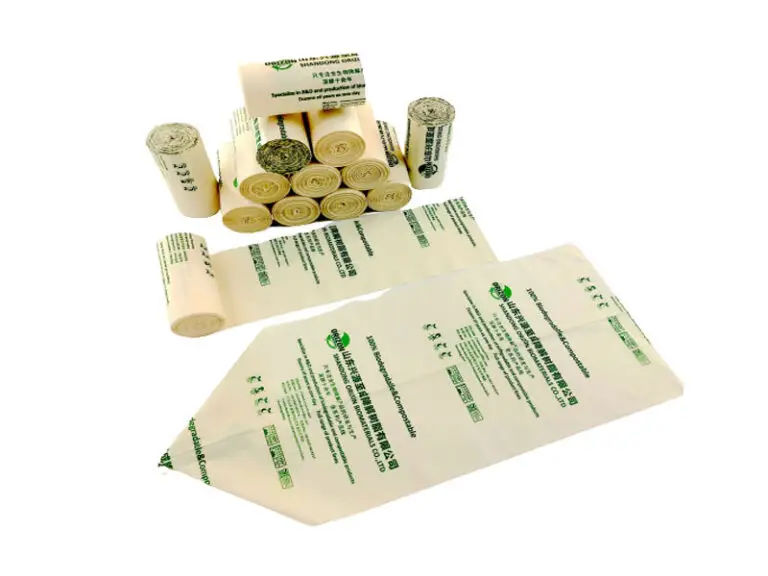
As global awareness of plastic pollution grows, more businesses are turning to certified compostable packaging as an alternative to conventional plastics.
However, not all products labeled “biodegradable” or “eco-friendly” are truly compostable. To prevent misleading claims, internationally recognized certification standards are used to verify whether a plastic product can safely break down in composting systems.
One of the most important standards in the United States is ASTM D6400.
This article explains what ASTM D6400 means, how the certification works, and why it is essential when sourcing compostable bags and packaging materials.
For a broader overview of global certification systems, see our guide to compostable certifications.

What Is ASTM D6400?
ASTM D6400 is a technical standard developed by ASTM International for plastics that are designed to break down in industrial composting facilities.
The standard defines the requirements a material must meet in order to be labeled as compostable plastic.
To comply with ASTM D6400, a product must:
• biodegrade into carbon dioxide
• physically disintegrate during composting
• leave no harmful residues in compost
These requirements ensure that compostable plastics behave similarly to organic materials such as food waste or yard trimmings during composting.
Many products that meet ASTM D6400 also obtain third-party certification through organizations such as BPI Certification, which verifies compliance with the standard.
Core Requirements of ASTM D6400
To qualify as compostable under ASTM D6400, materials must pass several laboratory tests that evaluate how they behave in industrial composting conditions.
Biodegradation
The material must convert at least 90% of its carbon into carbon dioxide within 180 days under controlled composting conditions.
This ensures the plastic breaks down into natural components rather than remaining as persistent fragments.
Disintegration
During a 12-week composting process, the material must physically break down so that no more than 10% of the original mass remains as visible fragments.
This requirement ensures the plastic does not contaminate finished compost.
Ecotoxicity
After composting, the resulting compost must be safe for plant growth.
Seed germination and plant biomass must reach at least 90% of the control sample, demonstrating that the material does not release harmful substances.

Industrial Composting Conditions
ASTM D6400 testing is based on industrial composting environments, which typically include:
• temperatures between 55–60°C
• controlled moisture and oxygen levels
• active microbial activity
These conditions are significantly different from home composting, where temperatures are usually much lower and degradation occurs more slowly.
Products intended for backyard composting may require additional certification such as OK Compost HOME.
ASTM D6400 vs EN 13432
ASTM D6400 is often compared with the European compostable plastic standard EN 13432.
Both standards evaluate similar performance characteristics, including biodegradation, disintegration, and environmental safety.
| Feature | ASTM D6400 | EN 13432 |
|---|---|---|
| Primary region | United States | European Union |
| Composting type | Industrial composting | Industrial composting |
| Biodegradation requirement | 90% in 180 days | Similar requirement |
| Heavy metal limits | Yes | Yes |
| Plant toxicity test | Required | Required |
Because the technical criteria are very similar, many compostable products are designed to comply with both standards for global market access.
For material differences, see PBAT vs PLA.

Why ASTM D6400 Certification Matters
Certification plays an important role in preventing greenwashing in the packaging industry.
Without recognized standards, products labeled “biodegradable” may still leave microplastics behind.
ASTM D6400 certification provides several key benefits:
Regulatory compliance
In many regions of the United States, products must meet ASTM D6400 requirements to legally claim compostability.
Market access
Retailers, municipalities, and waste collection programs often require certified compostable products before allowing them in regulated composting systems.
Environmental reliability
Certified compostable materials fully break down during composting and do not contaminate finished compost with microplastics.
Common Applications of ASTM D6400 Compostable Plastics
ASTM D6400 is widely used for plastic products that are designed to be composted together with organic waste.
Typical applications include:
• compostable garbage bags
• compostable shopping bags
• food waste collection liners
• compostable dog waste bags
• compostable packaging films
If you are sourcing commercial products, see our compostable garbage bags solutions.
How to Verify ASTM D6400 Compliance
When purchasing compostable products, buyers should confirm certification through reliable documentation.
Important verification steps include:
Check certification labels
Look for recognized certification marks such as:
• BPI Certified Compostable
• TÜV Austria Industrial Compost
Verify certification numbers
Certification numbers can typically be verified through the official certification body database.
Request supplier documentation
Professional suppliers should be able to provide:
• certification documents
• third-party test reports
• material safety documentation
This documentation ensures transparency and traceability throughout the supply chain.
Conclusion
ASTM D6400 is one of the most important global standards for verifying whether plastic materials can safely break down in industrial composting systems.
By defining strict requirements for biodegradation, disintegration, and environmental safety, the standard helps prevent misleading environmental claims and ensures that compostable plastics perform reliably in real waste management systems.
For businesses sourcing sustainable packaging, understanding ASTM D6400 is essential when evaluating compostable bags and other biodegradable plastic products.
FAQ
Is ASTM D6400 suitable for home composting?
No. ASTM D6400 is designed for industrial composting environments where temperatures and microbial activity are carefully controlled. Home composting usually requires additional certification such as OK Compost HOME.
Do ASTM D6400 compostable bags produce microplastics?
No. Materials that meet ASTM D6400 must biodegrade and disintegrate completely during composting, leaving no persistent plastic fragments.
Is ASTM D6400 certification mandatory?
The standard itself is voluntary, but many regulations and composting programs require certified products before allowing them into composting systems.
What materials are commonly used in ASTM D6400 compostable plastics?
Most certified compostable plastics are produced using blends of PLA, PBAT, and plant-based starch materials, which provide both flexibility and compostability.
Related Articles
• Ultimate Guide to Compostable Certifications
• What Is BPI Certification
• PBAT vs PLA: Material Differences